Nylon cleans better than olefin because its fiber chemistry accepts hot-water extraction, allowing deep soil removal, while olefin’s hydrophobic structure repels water and traps oily soils that standard cleaning methods can’t fully lift. Here’s the short version:
- Nylon (polyamide) accepts heat and water-based extraction, suspends soils effectively, and rebounds after traffic, so it looks cleaner longer.
- Olefin (polypropylene) repels water, attracts oil, and crushes under foot traffic, making it harder to deep-clean and faster to look worn.
- Practical rule: Buy nylon for high-traffic areas where appearance matters. Choose olefin only for moisture-exposed or low-traffic spots like basements or laundry rooms where bleach resistance outweighs cleanability.
Key Takeaways
Nylon cleans better than olefin because its fiber chemistry accepts hot-water extraction, rebounds after traffic, and responds to professional cleaning in ways olefin’s hydrophobic, oleophilic structure simply cannot match.
| Point | Details |
|---|---|
| Fiber chemistry drives cleanability | Nylon accepts hot-water extraction; olefin repels water and traps oily soils that require solvent boosters. |
| Resilience determines long-term appearance | Nylon pile rebounds after traffic and cleaning; olefin crushes permanently, making it look worn faster. |
| Tell your cleaner the fiber type | Chemistry, heat settings, and rinse strategy differ significantly between nylon and olefin jobs. |
| Follow the IICRC cleaning schedule | Professional cleaning every 12–18 months preserves appearance retention and fiber integrity for both fiber types. |
| Choose fiber by room function | Use nylon in high-traffic, appearance-critical rooms; reserve olefin for moisture-exposed or bleach-risk areas. |
Table of Contents
- Which room should get nylon and which should get olefin?
- How nylon and olefin compare across the dimensions that matter
- Why nylon and olefin respond so differently to cleaning
- How to treat common stains on nylon vs. olefin
- Why resilience determines how clean your carpet actually looks
- Routine maintenance that keeps either fiber looking its best
- What IICRC-certified professionals do differently for each fiber
- Pros, cons, and the mistakes that age carpet faster
- An honest take on which fiber actually serves homeowners better
- Carpetandtileplus can restore your carpet’s appearance
- Sources
Which room should get nylon and which should get olefin?
The fiber you pick should match what that room actually does to carpet. Appearance-retention rooms demand nylon; moisture-first rooms can tolerate olefin.
Pick nylon for:
- Stairs and hallways — constant foot traffic crushes pile fast; nylon’s resilience lets it rebound after cleaning.
- Living rooms and family rooms — spills happen, and nylon handles water-based stains and professional extraction far better.
- Home offices and bedrooms — lower traffic, but appearance still matters; nylon holds its look through repeated cleanings.
Pick olefin for:
- Basements — moisture and potential flooding make olefin’s bleach and water resistance genuinely useful here.
- Laundry rooms and mudrooms — bleach splashes and heavy moisture exposure are where olefin earns its keep.
- Outdoor transition areas or sun-exposed spaces — olefin’s UV resistance prevents fading that would ruin nylon.
Budget note: Olefin typically costs less upfront. But if you factor in faster matting, harder professional cleaning, and shorter appearance life in high-traffic areas, nylon often costs less over five to seven years. When budget is tight, prioritize nylon for the rooms that see the most foot traffic and schedule professional cleaning every 12–18 months to protect that investment.
How nylon and olefin compare across the dimensions that matter
| Dimension | Nylon | Olefin |
|---|---|---|
| Hot-water extraction response | Accepts heat and extraction; deep soil removal | Repels water; soils resist suspension |
| Water-based stain resistance | Good with factory treatment; open dye sites need protection | Excellent; fiber naturally resists water-based stains |
| Oil-based stain resistance | Good; soils release with standard extraction | Poor; oleophilic fiber traps grease and body oils |
| Resilience / appearance retention | High; pile rebounds after traffic and cleaning | Low; permanent crush and visible traffic lanes develop faster |
| UV / bleach tolerance | Moderate; fades with prolonged sun exposure | High; resists bleach and sunlight well |
| Required cleaning chemistry | Hot-water extraction, pH ≤ 10, acidic rinse | Solvent boosters, emulsifiers, thorough neutralizing rinse |
| Typical cost | Higher upfront | Lower upfront |
| Best use cases | High-traffic, appearance-critical rooms | Moisture-exposed, low-traffic, or outdoor-adjacent areas |
The functional differences, specifically extraction response and required chemistry, change how a professional cleans the carpet. The aesthetic differences, specifically resilience and appearance retention, determine how long it looks clean between services.
Why nylon and olefin respond so differently to cleaning
The gap between these two fibers starts at the molecular level, and it has direct consequences for every cleaning method you or a pro will use.
Hydrophilic vs. hydrophobic behavior
Nylon is hydrophilic: it absorbs water. That sounds like a disadvantage, but it’s actually what makes hot-water extraction so effective on it. When a professional injects hot water and cleaning solution into nylon pile, the fiber allows the solution to penetrate, surround soil particles, and carry them out during extraction. IICRC standards document this directly: olefin’s hydrophobic chemistry resists water-based extraction while nylon accepts it, enabling deeper soil removal.
Olefin does the opposite. Its hydrophobic surface sheds water, which means standard extraction can’t fully penetrate the fiber to lift embedded soils. You get surface cleaning, not deep cleaning.
Olefin’s oil problem
Olefin is oleophilic, meaning it actively attracts oily substances. Body oils, cooking grease, and tracked-in petroleum residues bond to olefin fibers at a chemical level. Generic detergents can’t break that bond. According to The Clean Scene Blog, olefin’s oleophilic and hydrophobic properties make it harder to fully extract oily soils, and using the wrong detergent leaves surfactant residue that re-attracts soil after cleaning.
Heat tolerance changes everything
Professional operators report that nylon’s thermal tolerance allows high-heat extraction with aggressive pile-lifting agitation, which rejuvenates the pile without permanent damage. Olefin can deform or even melt under similar heat and friction. That single difference forces pros to dial back both temperature and agitation on olefin jobs, which limits how thoroughly they can clean it.
Practical implications for homeowners:
- Tell your cleaner the fiber type before they start. The chemistry and machine settings differ significantly.
- For nylon: expect hot-water extraction with an acidic rinse to preserve factory stain treatments (pH ≤ 10 protects those treatments).
- For olefin: expect solvent-based presprays or emulsifiers, lower heat, and a thorough neutralizing rinse to prevent residue buildup.
For a deeper look at how carpet fiber types affect cleaning needs, the chemistry differences go well beyond just nylon and olefin.
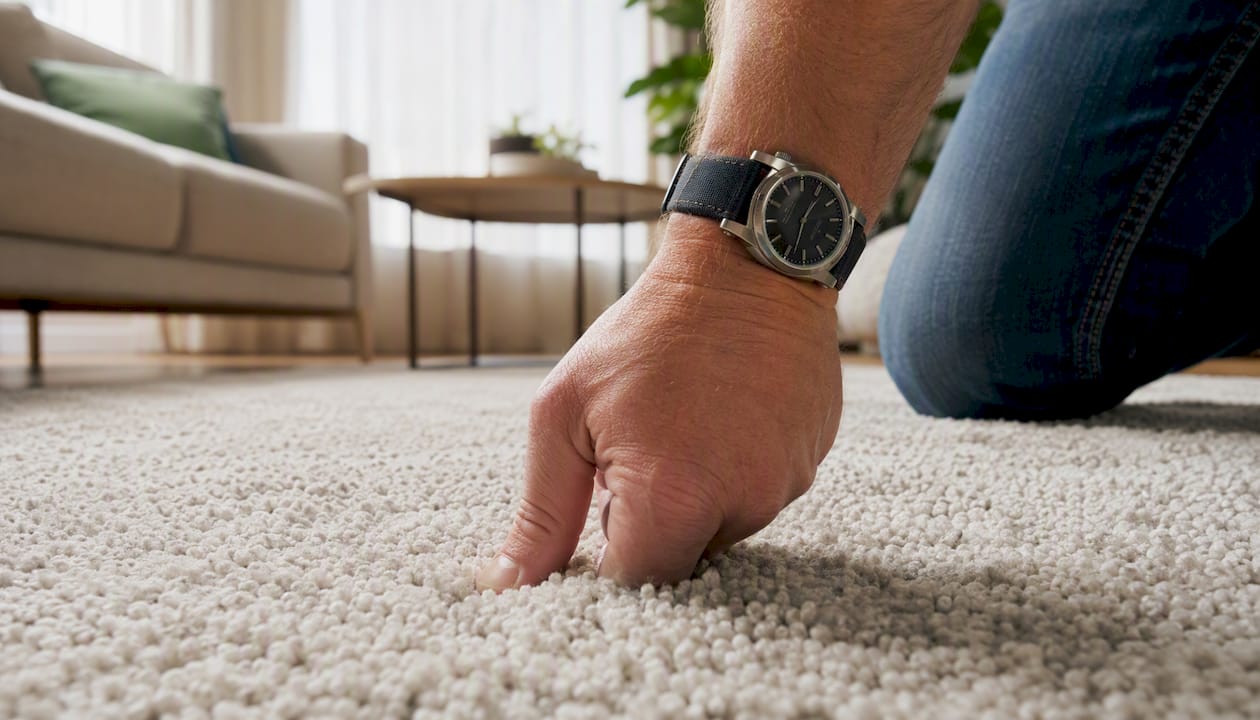
Pro Tip: Before your cleaner arrives, do a simple resilience test: press your thumb firmly into the pile for 10 seconds and release. Nylon springs back within a few seconds; olefin stays compressed. If you’re unsure, a burn test works too: nylon melts slowly and smells faintly like celery; olefin burns fast and smells like asphalt. Knowing your fiber lets you ask for the right chemistry from the start.
How to treat common stains on nylon vs. olefin
Not all stains behave the same way, and the fiber underneath changes which treatment actually works.
Water-based stains (coffee, juice, wine, soda)
On nylon:
- Blot immediately with a clean white cloth. Never rub.
- Apply a pH-neutral or mildly acidic spot cleaner (pH 5–7).
- Work from the outer edge inward to prevent spreading.
- Rinse with cold water and blot dry.
- Avoid alkaline cleaners above pH 10, which can strip factory stain treatments.
On olefin:
- Blot immediately. Olefin naturally resists water-based stains, so fresh spills often lift easily.
- Use a mild detergent solution and blot.
- Rinse thoroughly. Residue left in olefin re-attracts soil faster than in nylon.
Oil-based stains (grease, cooking oil, sunscreen, body lotion)
On nylon:
- Scrape off any solid material first.
- Apply a dry-solvent spot treatment or a degreasing pre-spray.
- Blot and work the solution in gently.
- Follow with hot-water extraction or a thorough water rinse.
- Nylon releases oily soils more readily than olefin once the right chemistry is applied.
On olefin:
- Scrape solids and blot excess oil.
- Apply a solvent-based emulsifier or a grease-breaking pre-spray. Standard dish soap is not enough.
- Allow dwell time (3–5 minutes) for the emulsifier to break the bond.
- Blot and rinse with warm water.
- Rinse a second time. Olefin’s oleophilic nature means residue lingers, and any leftover surfactant will attract more soil within days.
Pet urine and dye stains
Pet urine on either fiber needs an enzymatic cleaner to break down uric acid crystals, not just a surface rinse. On olefin, the IICRC tip sheet notes that filtration soils and heavy accumulated soils are especially difficult to remove, and some stains may not fully lift regardless of technique. Dye stains on nylon are a real risk because nylon’s open dye sites absorb color-based liquids (wine, fruit punch, certain cleaners). A factory stain treatment slows this, but it doesn’t make nylon immune. Act fast and use a fiber-safe spot cleaner.
Watch for wicking on olefin: After cleaning, moisture can travel up from the backing and bring dissolved soils back to the surface as the carpet dries. If a spot reappears 24–48 hours after cleaning, the soil wicked back up. Place a weighted stack of white towels over the damp area after treatment to draw moisture upward before it dries.
Why resilience determines how clean your carpet actually looks
A carpet can be technically clean and still look dirty. That’s a resilience problem, not a cleaning problem.
Resilience is a fiber’s ability to spring back after compression. When pile fibers crush under foot traffic and stay down, they reflect light differently than upright fibers. That uneven light reflection reads as soiling to the eye, even on a freshly cleaned carpet. BaneClene’s fiber chemistry guide confirms nylon’s superior resilience and abrasion resistance, which is why it can be cleaned aggressively with heat and extraction for deep results.
Olefin has significantly lower resilience. In high-traffic areas like hallways and stairs, olefin pile crushes permanently within months. Those flattened traffic lanes don’t recover after cleaning because the fiber lacks the molecular memory to rebound. The carpet isn’t dirty; it’s structurally aged.
Nylon’s pile memory is what makes professional cleaning genuinely restorative. After hot-water extraction with pile-lifting agitation, nylon pile stands back up. The room looks refreshed, not just surface-wiped.
Appearance retention matters more than initial stain resistance. The real measure of a carpet fiber is how it looks after the fifth professional cleaning, not the first spill.
IICRC standards recommend professional cleaning every 12–18 months to maintain appearance retention and fiber integrity. For high-traffic nylon installations, staying on that schedule keeps the pile upright and the fiber performing the way it was designed to.
Routine maintenance that keeps either fiber looking its best
The gap between a carpet that lasts eight years and one that looks worn in three usually comes down to what happens between professional cleanings.
Vacuuming cadence and technique:
- Nylon: vacuum at least twice a week in high-traffic areas using a vacuum with a rotating brush roll or pile lifter. The agitation helps keep pile upright between professional cleanings.
- Olefin: vacuum regularly but use a lower suction setting without aggressive brush roll action. Harsh agitation accelerates pile crush on lower-resilience olefin.
- Both fibers benefit from slow, overlapping passes rather than quick back-and-forth strokes.
Spot care do’s and don’ts:
- Do blot spills immediately on both fibers.
- Do use pH-neutral cleaners on nylon to protect stain treatments.
- Do use solvent-based spot removers on olefin for oily stains.
- Don’t use bleach on nylon. It destroys dye and stain treatments.
- Don’t use high-alkaline cleaners (pH above 10) on nylon.
- Don’t assume water alone will rinse oil out of olefin. It won’t.
When to call a professional:
Follow the IICRC-recommended 12–18 month interval for professional cleaning. High-traffic households with pets or children may need service every 6–12 months. When you call, tell the cleaner the fiber type upfront. That single piece of information determines the prespray chemistry, machine temperature, and rinse strategy they’ll use. A cleaner who treats olefin like nylon will either under-clean it or damage it.
For homeowners who want to understand deep carpet cleaning preparation before a professional visit, knowing your fiber type is the most useful thing you can bring to that conversation.
What IICRC-certified professionals do differently for each fiber
The difference between a good cleaning job and a great one is fiber-matched chemistry and the right equipment settings.
For nylon:
Professionals use hot-water extraction at higher temperatures, often above 200°F at the jet, paired with a pH-controlled prespray (typically pH 8–10) that loosens soils without stripping factory stain treatments. After extraction, an acidic rinse (pH 4–6) neutralizes any alkaline residue and closes the fiber’s dye sites, which protects color and stain resistance. Pile-lifting agitation during the process physically stands the fibers back up, which is what gives a freshly cleaned nylon room that “new carpet” look. Professional operators confirm that nylon consistently yields better appearance-retention results after hot-water extraction than olefin does.
For olefin:
The approach changes substantially. Lower heat settings prevent fiber deformation. Solvent-based boosters or emulsifying presprays are applied with dwell time to break the bond between oily soils and the oleophilic fiber. Thorough rinsing is non-negotiable: any surfactant residue left in olefin will attract new soil within days, making the carpet look dirty faster than before cleaning. IICRC standards require fiber-specific chemistry precisely because a one-size-fits-all approach fails on olefin.
What to ask when hiring a pro:
Ask whether they adjust prespray chemistry and machine temperature by fiber type. Any IICRC-certified cleaner should answer yes without hesitation. If they don’t ask what fiber you have before starting, that’s a red flag. For commercial carpet cleaning, fiber identification matters even more because mixed-fiber installations are common.
Pro Tip: Ask your cleaner: “Do you use an acidic rinse on nylon and solvent boosters on olefin?” A yes tells you they’re working from fiber chemistry, not a one-size-fits-all spray bottle.
Pros, cons, and the mistakes that age carpet faster
Nylon pros and cons:
- Pros: Superior resilience, deep-cleanable with hot-water extraction, responds well to pile-lifting agitation, holds appearance through repeated professional cleanings, wide color range.
- Cons: Higher upfront cost, open dye sites make it vulnerable to dye-based stains without factory treatment, moderate UV resistance.
Olefin pros and cons:
- Pros: Lower cost, bleach-resistant, UV-resistant, naturally resists water-based stains, good for moisture-prone areas.
- Cons: Low resilience leads to permanent crush in high-traffic areas, oleophilic behavior traps oily soils, requires specialized chemistry to clean properly, higher risk of reappearing spots after cleaning.
Common mistakes that shorten appearance life:
- Using high-pH presprays on stain-treated nylon. Alkaline chemistry above pH 10 strips factory stain treatments, leaving the fiber unprotected. Fix: always confirm pH compatibility with your cleaner.
- Assuming oil stains will rinse out of olefin with water. They won’t. Water-only rinsing leaves oily residue that re-attracts soil. Fix: use a solvent-based emulsifier and rinse twice.
- Overheating olefin. High extraction temperatures can deform or melt olefin pile. Fix: tell your cleaner the fiber type before they set machine temperature.
- Skipping the rinse on olefin. Surfactant residue in olefin is one of the fastest ways to accelerate re-soiling. Fix: request a thorough neutralizing rinse as part of every professional service.
- Vacuuming olefin with an aggressive brush roll. It accelerates pile crush. Fix: reduce brush roll speed or switch to suction-only mode.
An honest take on which fiber actually serves homeowners better
Most carpet guides frame the nylon vs. olefin question as a cost trade-off. That framing misses the point. The real question is: what does this carpet look like after three years of living in it?
Olefin’s low price is real. So is its bleach resistance. But in a hallway, a family room, or anywhere a household actually lives, olefin’s inability to be deep-extracted and its tendency to crush permanently means you’re looking at a carpet that ages visibly fast. No amount of professional cleaning fully reverses that.
Nylon costs more upfront, but it’s the fiber that responds to care. A well-maintained nylon carpet cleaned on the IICRC-recommended schedule looks better at year five than a neglected olefin carpet looks at year two. That’s not marketing; it’s fiber chemistry. Nylon dominates more than half the carpet market because of its durability and appearance retention, and that market share reflects decades of homeowners and professionals reaching the same conclusion.
At Carpetandtileplus, our IICRC-certified cleaners match chemistry to fiber on every job. For nylon, that means high-heat extraction with an acidic rinse. For olefin, it means solvent boosters and a thorough neutralizing rinse. The fiber type determines the method, and the method determines the result.
Carpetandtileplus can restore your carpet’s appearance
Whether your home has nylon or olefin, fiber-matched professional cleaning makes a visible difference. Carpetandtileplus serves homeowners across the Northwest Suburbs of Chicago, including Elgin, Bartlett, Streamwood, Arlington Heights, Palatine, Barrington, and Hanover Park.

Our IICRC-certified team uses organic cleaning products and fiber-specific chemistry to deep-clean without damaging factory treatments or pile structure. With a one-hour dry time, you’re back to normal the same day. For pet stains, odors, or heavy traffic damage, we handle those too.
Book a residential cleaning appointment and tell us your fiber type when you call. That one detail helps us bring exactly the right chemistry to your home.
Sources
These are the primary references for fiber chemistry, cleaning standards, and consumer guidance:
- IICRC Standards
- Nylon carpet cleaning: a pro operator guide
- Why olefin or polyester carpets are harder to professionally clean (The Clean Scene Blog)