Low moisture carpet cleaning is defined as a method that uses minimal water combined with encapsulation technology to lift and trap dirt into dry crystals, which are then vacuumed away. Unlike traditional steam cleaning, this approach typically delivers drying times of 1 to 2 hours, making it one of the most practical options for busy homes and commercial spaces. The industry term for this process is encapsulation cleaning, and it has become a preferred maintenance method for facilities managers, property owners, and residential customers who cannot afford hours of downtime waiting for wet carpets to dry.
What is low moisture carpet cleaning and how does it work?
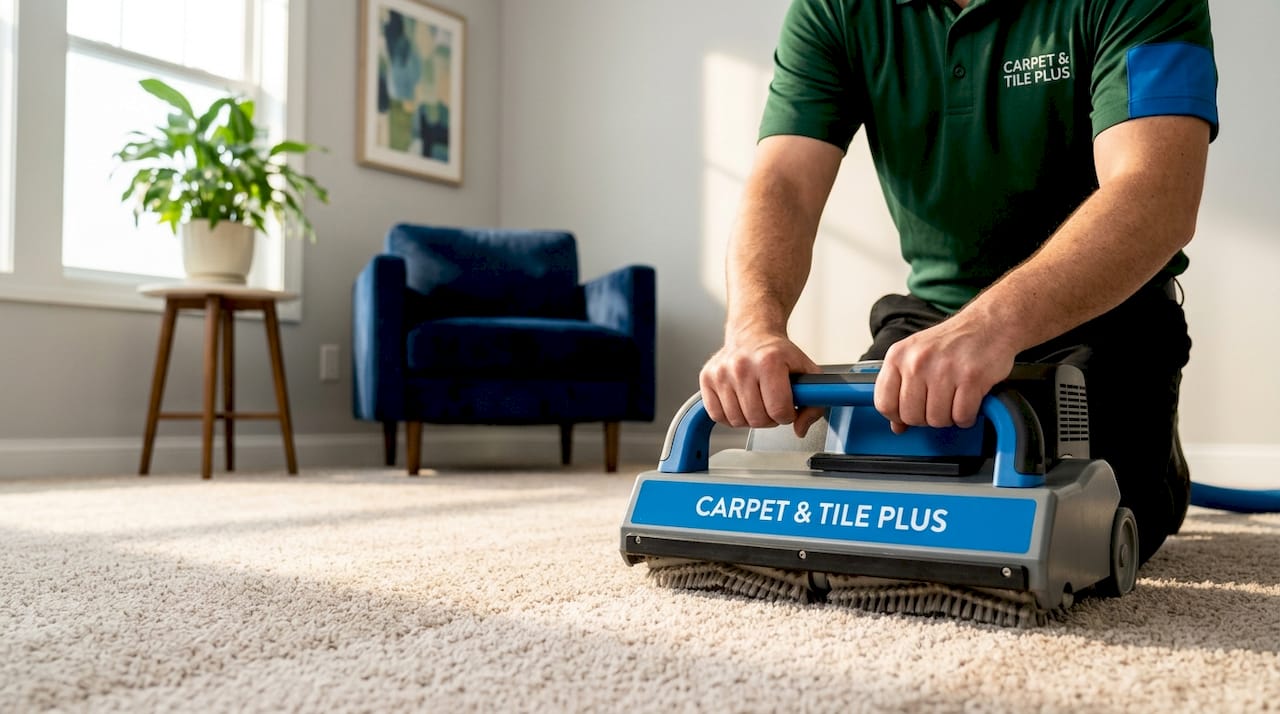
Encapsulation cleaning works by applying a specialized cleaning solution that contains advanced polymers directly to carpet fibers. As the solution contacts soil and debris, those polymers begin to crystallize around dirt particles, encasing them in a brittle shell that releases from the fiber once dry. The process is methodical, and getting it right requires following each step in sequence.
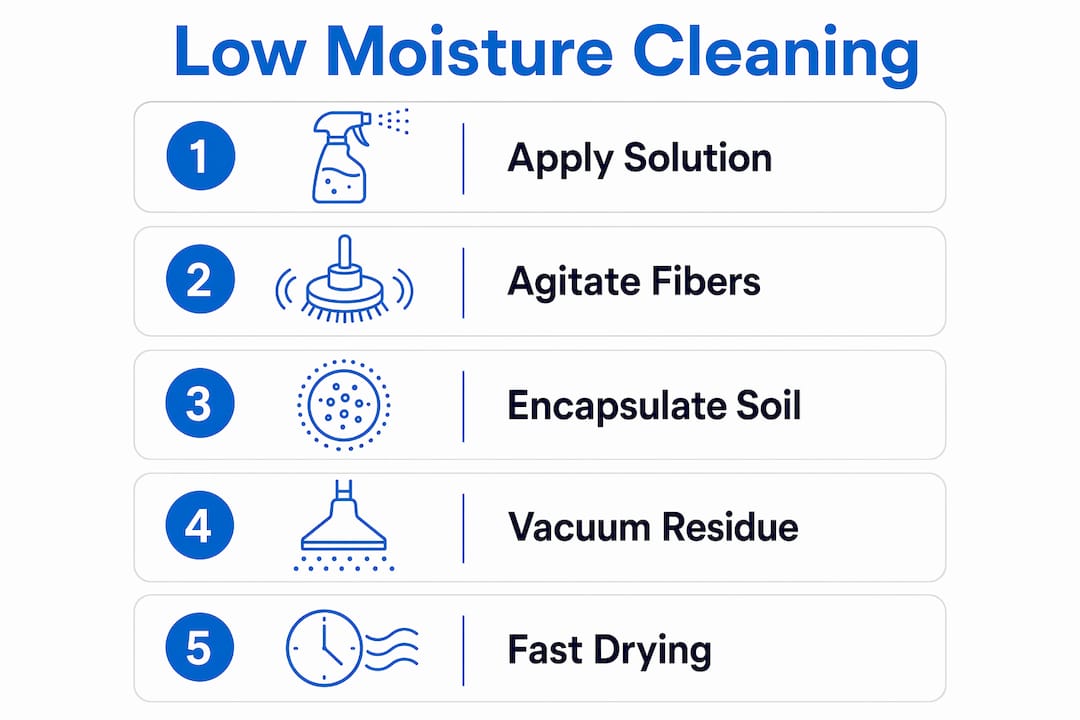
Here is how a professional low moisture carpet cleaning session unfolds:
- Pre-treatment. A technician applies an encapsulating cleaning solution, such as Actichem’s Encap Pro or Bluegreen Magic, evenly across the carpet. The solution begins breaking down surface soils immediately on contact.
- Mechanical agitation. Using a rotary brush machine or oscillating pad system, the technician works the solution deep into the carpet pile. Thorough agitation coverage is what separates a clean result from a patchy one. Uneven passes leave behind inconsistently treated areas.
- Polymer crystallization. The solution dries as the polymers harden around suspended soil particles. This stage requires patience. Rushing it undermines the entire process.
- Drying period. The carpet needs time to reach a dry state before any foot traffic or vacuuming. Products like Actichem’s Encap Pro recommend waiting 30 to 60 minutes before allowing foot traffic and at least 24 hours before vacuuming.
- Vacuum removal. Once fully dry, a thorough vacuuming lifts the crystallized residue and encapsulated soil out of the carpet. This final step is what actually removes the dirt from the building.
Pro Tip: Even agitation is the single most important variable in encapsulation cleaning. A technician who rushes the agitation pass will leave behind uneven soil suspension, which shows up as patchy dry-down and inconsistent color across the carpet.
What are the benefits of low moisture carpet cleaning?
The benefits of low moisture carpet cleaning methods go well beyond saving water. The process addresses several pain points that traditional hot water extraction cannot solve as efficiently.
- Fast drying. Encapsulation cleaning dries in 20 to 60 minutes, compared to 6 to 12 hours for hot water extraction. That difference is the gap between cleaning during a lunch break and shutting down an office for a full day.
- Lower risk of mold and odor. Less water in the carpet means less opportunity for moisture to penetrate the backing and pad, where mold and mildew develop. This is especially relevant in older buildings or spaces with limited airflow.
- Reduced re-soiling. Encapsulation technology reduces sticky residue left after cleaning. Less residue means fewer airborne particles adhere to fibers between cleanings, which extends the time before the carpet looks dirty again.
- Suitability for moisture-sensitive carpets. Some carpet constructions, including certain loop pile and natural fiber types, are vulnerable to shrinkage or distortion when saturated. Low moisture methods protect those investments.
- Eco-friendly operation. Significantly less water consumption and lower energy requirements make encapsulation a more sustainable choice. For businesses with environmental commitments, this matters to clients and staff alike.
- Appearance consistency. Regular encapsulation maintains a uniform look across high-traffic areas, which is critical in retail, hospitality, and office environments where first impressions count.
Pro Tip: For commercial properties, the fast drying advantage is not just a convenience. It is a direct cost reduction. Cleaning during business hours eliminates the need for after-hours labor rates and the logistical complexity of scheduling around building access.
You can read more about organic cleaning solutions and why they matter for homes with children and pets.
Low moisture vs steam cleaning: which method is right for you?
Choosing between low moisture and steam cleaning comes down to what your carpet actually needs right now. Both methods have legitimate strengths, and the best carpet care programs use both.
| Factor | Low moisture (encapsulation) | Steam cleaning (hot water extraction) |
|---|---|---|
| Drying time | 20 to 60 minutes | 6 to 12 hours |
| Soil removal rate | 65 to 70% (surface soil) | 90 to 95% of soil including deep particulates |
| Water usage | Minimal | High |
| Best use case | Routine maintenance, high-traffic upkeep | Restorative deep cleaning, allergen removal |
| Allergen control | Limited | Strong |
| Equipment cost | Lower | Higher |
| Disruption | Minimal | Significant |
| Re-soiling risk | Lower (less residue) | Higher if over-wet |
Hot water extraction wins decisively when carpets carry embedded allergens, biological contaminants, or heavy particulate buildup. Allergy sufferers and households with pets benefit most from periodic extraction because it physically flushes debris out of the pile. Encapsulation excels as appearance maintenance in high-traffic commercial settings, but it is not a replacement for extraction.
The most effective programs combine both. Low moisture cleaning scheduled between periodic deep extractions keeps carpets looking sharp year-round while controlling costs and minimizing disruption. A typical commercial schedule might run encapsulation monthly with hot water extraction quarterly. Residential properties often reverse that ratio, with extraction as the primary method and encapsulation used for spot maintenance between annual deep cleans.
For a broader look at how carpet drying works and what affects it, that resource covers the variables in detail.
Practical tips for scheduling and maintaining low moisture carpet cleaning
Getting the most from encapsulation cleaning requires more than hiring the right technician. How you manage the carpet before and after the service directly affects results.
- Vacuum before the appointment. Removing loose surface debris before the technician arrives allows the encapsulating solution to focus on bonded soil rather than loose particles. This improves the overall result without adding time or cost.
- Respect the drying window. Products like Actichem’s Encap Pro require at least 24 hours before vacuuming to allow full crystallization. Vacuuming too early pulls up partially dried residue and defeats the purpose of the process.
- Restrict foot traffic during drying. Even light foot traffic during the drying window can press partially crystallized residue back into the fiber, making it harder to vacuum out later. Rope off treated areas or schedule cleaning when the space will be unoccupied.
- Match cleaning frequency to traffic levels. Light residential traffic typically warrants encapsulation every three to six months as a maintenance clean. High-traffic commercial spaces may need monthly encapsulation to maintain appearance standards. See how often carpets should be cleaned for a full breakdown by space type.
- Use the right equipment. A cylindrical brush machine penetrates deeper into the pile than a flat pad system, making it better suited for cut pile and plush carpets. Flat pad systems work well on low-profile commercial loop pile. Using the wrong tool reduces agitation effectiveness and can leave residue behind.
- Watch for patchy dry-down. If sections of the carpet dry unevenly or show visible white residue after vacuuming, the agitation pass was likely inconsistent. A follow-up vacuum pass usually resolves minor residue, but significant patchiness may require a second treatment.
For businesses managing multiple locations, commercial carpet care best practices outlines how to build a maintenance schedule that keeps costs predictable.
Key takeaways
Low moisture carpet cleaning works because encapsulation polymers crystallize around soil, enabling fast removal with minimal water and near-zero downtime.
| Point | Details |
|---|---|
| Core process | Encapsulation polymers trap dirt into dry crystals that vacuum out cleanly after drying. |
| Drying advantage | Carpets dry in 20 to 60 minutes versus 6 to 12 hours for hot water extraction. |
| Soil removal limits | Encapsulation removes 65 to 70% of soil; extraction removes 90 to 95% including allergens. |
| Best combined approach | Schedule encapsulation for routine upkeep and extraction periodically for deep restorative cleaning. |
| Technique matters | Uneven agitation or premature vacuuming causes patchy results and faster re-soiling. |
What I have learned after years of working with both methods
After more than two decades cleaning carpets across the Northwest Suburbs of Chicago, I have watched encapsulation cleaning go from a niche technique to a mainstream maintenance tool. And I will be direct: it is genuinely impressive for what it is designed to do. But I have also seen it oversold.
The mistake I see most often is treating encapsulation as a substitute for extraction rather than a complement to it. A hotel lobby cleaned exclusively with low moisture methods for two years will look fine on the surface, but pull back a corner of that carpet and you will find embedded soil that no encapsulant ever touched. That buildup degrades fiber, traps odors, and eventually shortens carpet life.
What actually works is the combined approach. At Carpetandtileplus, we use low moisture methods to keep carpets looking sharp between deeper services, not to replace those services. Customers who follow that program consistently get more years out of their carpet and spend less per year on cleaning overall.
I also want to address the environmental angle honestly. Encapsulation does use less water, and that matters. But the real environmental win comes from extending carpet life. Manufacturing a new carpet carries a far larger environmental cost than any cleaning method. Keeping your existing carpet clean and intact longer is the most sustainable choice you can make.
If you are evaluating a cleaning company, ask them directly how they integrate encapsulation with extraction. A company that only offers one method is not giving you the full picture.
— Jim
Professional low moisture carpet cleaning from Carpetandtileplus

Carpetandtileplus brings over 20 years of IICRC-certified experience to residential and commercial carpet cleaning across Elgin, Bartlett, Streamwood, Arlington Heights, Palatine, Barrington, and Hanover Park. Our technicians use organic, eco-friendly encapsulation solutions that are safe for children, pets, and moisture-sensitive carpets. With a one-hour dry time as our standard, we minimize disruption to your home or business without cutting corners on results. Whether you need routine maintenance cleaning or a full restorative service, we build a program around your space and traffic levels. Contact us today for a quote on residential carpet cleaning or explore our commercial cleaning services for businesses that cannot afford long downtime.
FAQ
What is the difference between low moisture and dry carpet cleaning?
Low moisture carpet cleaning uses a small amount of liquid solution with encapsulation polymers, while dry carpet cleaning typically uses a dry compound or powder with no liquid at all. Both methods avoid saturation, but encapsulation delivers better soil suspension and is more widely used in professional settings.
Is low moisture carpet cleaning effective for pet stains and odors?
Encapsulation cleaning handles surface soils and light staining well, but pet urine that has penetrated the carpet backing requires hot water extraction or a targeted enzyme treatment to fully neutralize. For pet households, a combined approach works best.
How long should I wait before walking on carpet after low moisture cleaning?
Most encapsulation products, including Actichem’s Encap Pro, recommend waiting 30 to 60 minutes before foot traffic and at least 24 hours before vacuuming. Following these windows protects the crystallization process and maximizes soil removal.
How often should businesses schedule low moisture carpet cleaning?
High-traffic commercial spaces benefit from monthly encapsulation cleaning to maintain appearance, supplemented by quarterly hot water extraction for deep soil and allergen removal. Lower-traffic offices can extend encapsulation intervals to every two to three months.
Does low moisture carpet cleaning work on all carpet types?
Encapsulation works on most synthetic carpet types, including nylon, polyester, and olefin. It is particularly well-suited for moisture-sensitive constructions where saturation poses a risk of shrinkage or backing damage. Natural fiber carpets like wool may require specialist assessment before any cleaning method is applied.