The single most effective way to avoid carpet cleaning scams is to verify the cleaner’s certification and get a written, itemized quote before any equipment touches your carpet. Check credentials through the IICRC Global Locator and review the company’s history on the Better Business Bureau. Carpet & Tile Plus, for example, publishes exactly the kind of verifiable details, IICRC-certified technicians, insurance, and a track record, that scammers avoid showing you. The rest of this guide walks through the scams themselves, real pricing ranges, vetting steps, and what to do if you already got burned.
TL;DR:
- Verify the carpet cleaner’s certification through the IICRC Global Locator and check their complaint history on the Better Business Bureau before booking.
- Beware of bait-and-switch tactics where low advertised prices lead to higher charges for services like deep extraction or premium methods.
- Expect a written, itemized quote covering room count, cleaning method, pre-treatment, and dry time, and be cautious of significantly low estimates.
- Avoid cleaners who demand cash upfront, refuse inspection before quoting, or provide unverified claims of certification or insurance.
- Document the job beforehand with photos and keep all receipts and communication should you need to dispute fraudulent charges or file complaints.
Table of Contents
- Top Carpet Cleaning Scams Homeowners Actually Encounter
- Red Flags and Deceptive Sales Tactics to Watch For
- What Reasonable Carpet Cleaning Pricing Looks Like
- How to Verify and Vet a Carpet Cleaner Before You Book
- If You Suspect You’ve Been Scammed
- How to Hire Safely: A Booking Checklist
- Why Certification and Verifiable Local Proof Matter
- A Local Perspective on Spotting Carpet Cleaning Scams
- How Carpet & Tile Plus Protects Homeowners
- Where to Verify Credentials and Report Scams
- Sources
Top Carpet Cleaning Scams Homeowners Actually Encounter
Most carpet cleaning fraud follows a handful of predictable scripts. Once you recognize the pattern, the pitch stops working on you.
The classic is bait-and-switch: an ad or flyer promises four rooms cleaned for a very low price, and once the van is in your driveway, the technician suddenly discovers your carpet needs “deep soil extraction” or “pre-treatment” that costs significantly more. This is common enough that consumer advocacy groups specifically warn homeowners about spring-cleaning offers that use rock-bottom advertised rates to get a foot in the door.
A close cousin is the “best method” upsell. A technician arrives, glances at your carpet, and declares that the cheap steam method you booked “won’t work” on your fiber type, then pitches a premium process at triple the price using vague technical language you can’t verify on the spot.
Then there’s the surface clean, where a rushed job leaves the carpet looking damp and fluffed for a day, but stains resurface within a week because the equipment never extracted the soil trapped deep in the padding. According to Angi’s breakdown of common carpet cleaning scams, these three patterns, low-price bait-and-switch, method upsells, and surface-only cleaning, account for the bulk of homeowner complaints nationwide.
Watch for these secondary red flags too:
- Technicians who “accidentally” measure your square footage high to inflate the bill
- Cleaners who swap the advertised eco-friendly or organic solution for a cheaper generic chemical
- Verbal claims of “IICRC certified” with no certificate, number, or company name to check
Red Flags and Deceptive Sales Tactics to Watch For
Scam operators tend to rely on urgency and pressure instead of proof. If you notice any of the following during a phone call, a knock at the door, or the first five minutes of an in-home visit, treat it as a signal to slow down.
- Door-to-door pressure and “today only” pricing. Legitimate cleaners rarely cold-call your neighborhood offering a one-day discount that expires the moment they leave.
- Demands for cash only, paid up front. Reputable companies invoice after the work is done and accept normal payment methods.
- No pre-inspection before quoting a price. A cleaner who won’t walk your rooms first has no real basis for a number.
- Refusal to answer basic questions about method or equipment. If you ask “what cleaning method and what dry time should I expect” and get a shrug, that’s a problem.
- Unmarked vehicles, no company name on the invoice, or a phone number that goes to voicemail with no business greeting.
- Online reviews that feel inconsistent, a handful of glowing five-star reviews from the same week with no detail, surrounded by older one-star complaints about no-shows or damage.
Combining a cheap headline price with pressure and fake social proof is a documented pattern in seasonal cleaning scams, and the fix is the same every time: ask for the business name, tell them you need time to verify it, and decline until you have.
What Reasonable Carpet Cleaning Pricing Looks Like
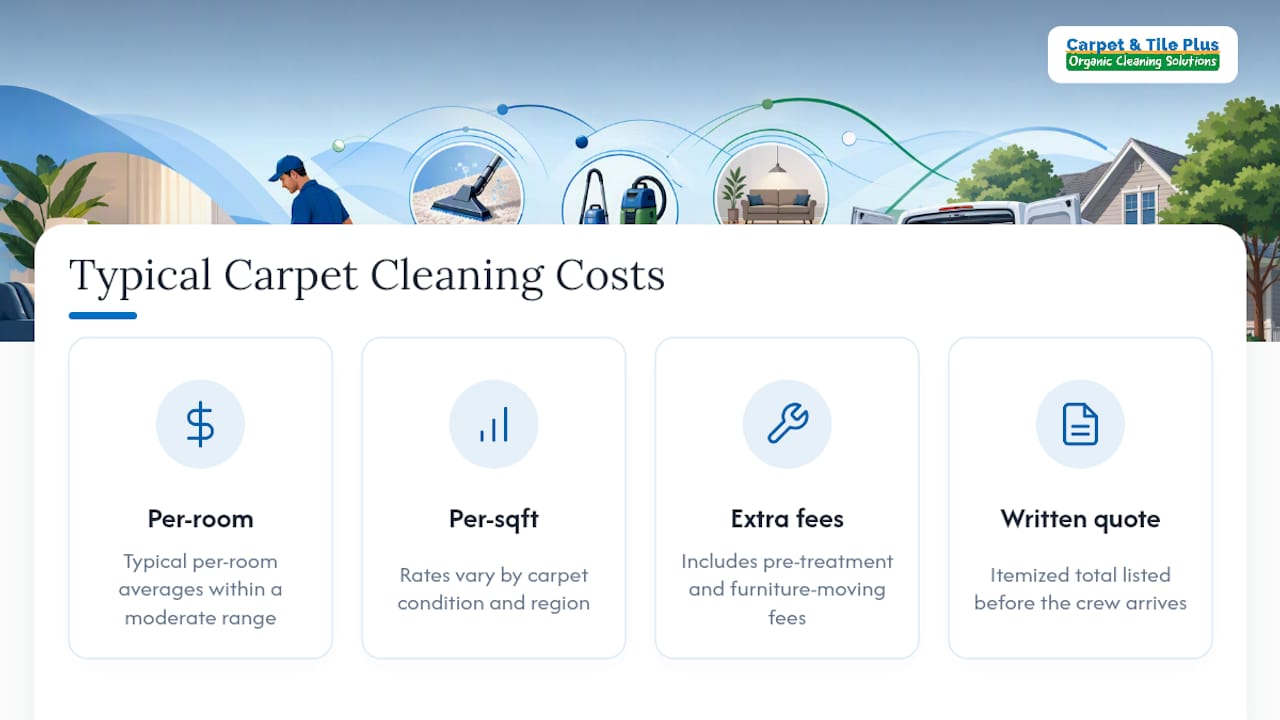
Pricing is one of the fastest ways to spot a scam, because real cleaning costs money and takes time, and a quote that ignores both is a warning sign. National data on carpet cleaning prices indicate typical per-room averages within a moderate range, with per-square-foot rates varying according to carpet condition and region.
Pro Tip: Quotes that fall well below the standard range aren’t a deal. They’re a sign the “real” price is coming later, after the technician is already in your living room.
An itemized written quote should list room count or square footage, the cleaning method, any pre-treatment charges, furniture-moving fees, and the total before the crew arrives, not after.
How to Verify and Vet a Carpet Cleaner Before You Book
Vetting takes ten minutes and it’s the single best insurance policy against a bad job or a bait-and-switch invoice.
Start with certification. Pull up the IICRC Global Locator and search by the firm’s name or ask for the technician’s certification number directly. IICRC’s own verification process distinguishes between a certified firm and an individually certified technician, and you want both confirmed, not just a logo on a website.
From there, work through this list:
- Search the company on the Better Business Bureau and look for a pattern of unresolved complaints, not just a star rating.
- Cross-check Google and Yelp reviews, and learn to read carpet cleaning company reviews the right way so you catch cherry-picked or fake ones.
- Ask for a certificate of insurance naming the insurer and policy limits, not just a verbal “we’re insured.”
- Ask specifically what method they use, what fiber types it’s safe for, and how long dry time will take, then get the answer in writing.
- Save every quote, the technician’s name, and photos of your carpet’s condition before work starts.
The Home Service Simple review directory is another place to cross-reference customer feedback on local providers before you commit.
If You Suspect You’ve Been Scammed
Move fast. Documentation and a clear paper trail are what get your money back.
- Stop payment immediately if the charge hasn’t fully processed, and demand an itemized invoice on the spot.
- Photograph the carpet, the equipment used, and any damage, and keep every text, email, and receipt tied to the job.
- Dispute the charge with your credit card company or bank; a chargeback is often faster than chasing the company directly, a step consumer advocates specifically recommend.
- File a complaint with the Better Business Bureau and with the FTC, then contact your state attorney general’s consumer protection office.
- Call local police if the company demanded entry under false pretenses or refused to leave.
- For unresolved amounts, small-claims court is an option, and you’ll need the written quote, invoice, photos, and payment records to file.
If the company calls afterward demanding “extra fees” for supposedly missed damage, or threatens you unless you pay more, that’s a second scam layered on the first. Don’t send anything without a written explanation and time to verify it.
How to Hire Safely: A Booking Checklist
A few minutes of prep before the crew arrives prevents most surprise charges and most scams outright.
Before booking, ask for the exact pricing model, what’s included, the furniture policy, the dry-time guarantee, and whether rework is covered if stains resurface. Get all of it in writing: itemized pricing, start and end times, the cleaning method, warranty terms, and the cancellation policy.
- Vacuum ahead of time and mark stubborn stains so the technician knows what they’re dealing with
- Move small valuables and breakables yourself to avoid furniture-moving surcharges
- Confirm the dry-time guarantee in writing, preparing your home properly speeds this up further
- Ask how they’d evaluate the job after service if something looks off
Pro Tip: Take before photos of every room being cleaned and save copies of every text and email. If a dispute ever comes up, that paper trail is your entire case.
Why Certification and Verifiable Local Proof Matter
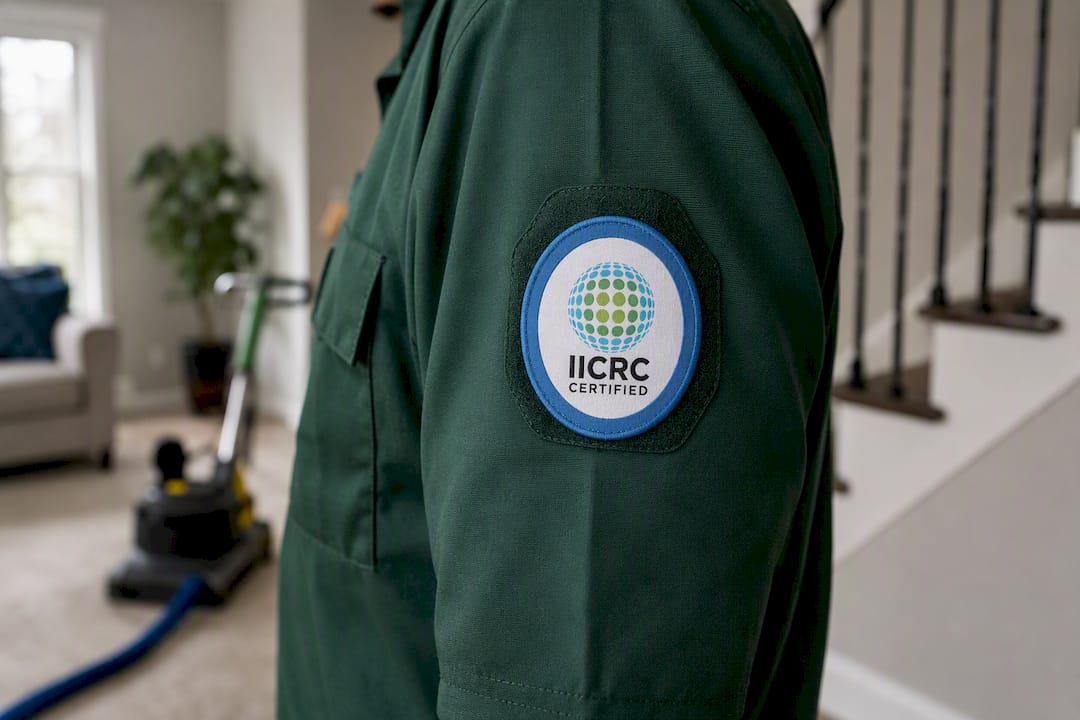
IICRC certification exists because carpet fiber types, cleaning chemistry, and drying science aren’t guesswork, and a firm that invests in that training usually has nothing to hide. Certified firms employ certified technicians who can be checked by name or number through the Global Locator, and that single check separates real professionals from operators running a scam.
BBB profiles matter for a similar reason: a pattern of consistent, recent, resolved complaints tells you more than a headline star rating ever will. Trust the pattern, not the number.
Carpet & Tile Plus’s own credentials work as a model of what verifiable trust looks like: IICRC-certified technicians, organic cleaning products, a one-hour dry time, and more than 20 years serving the Northwest Suburbs of Chicago with hundreds of five-star reviews. Before booking any cleaner, ask for that same level of proof, certification numbers and an insurance certificate, in writing.
A Local Perspective on Spotting Carpet Cleaning Scams
I’ve watched the same low-ball ads cycle through Chicago-area mailboxes for years, four rooms for $29, and the math never works. A technician can’t drive a van, run water-extraction equipment, and pay for insurance on a number that low, so the shortfall gets made up somewhere, usually in fees you didn’t agree to.
My advice doesn’t change from job to job: verify the certification before anyone steps inside, get the price in writing, and take your own photos before the equipment comes out. Homeowners who do those three things almost never get scammed, because scammers count on you skipping them…
— Jim
How Carpet & Tile Plus Protects Homeowners
Carpet & Tile Plus gives you the exact opposite of a bait-and-switch quote: a written estimate before we start, proof of insurance on request, and IICRC-certified technicians using organic cleaning products, with none of the guesswork you’d get from an unverified outfit knocking on your door.
When you book with us, you get a clear price upfront, a one-hour dry time guarantee, and a company with more than 20 years of history in the Northwest Suburbs of Chicago, Elgin, Bartlett, Streamwood, Arlington Heights, Palatine, Barrington, and Hanover Park included, plus hundreds of verifiable five-star reviews you can check yourself before you ever let us in the door. If pet stains or lingering odors are part of what’s driving you to search for help, our odor removal service covers that too. Ready to book a cleaning you can verify start to finish? Visit our residential carpet cleaning page to request your written quote today.
Where to Verify Credentials and Report Scams
Bookmark these before you need them: the IICRC Global Locator for certification checks, the Better Business Bureau for complaint histories, the FTC for filing fraud reports, and your state attorney general’s consumer protection office for local escalation. Angi’s scam-avoidance guide is a solid supplementary read for additional context.
Sources
- IICRC Global Locator
- Watch Out for These Spring-Cleaning Scams
- How to Avoid Carpet Cleaning Scams
- Carpet cleaning prices