
Yes, carpets commonly hold dust mites and their allergenic waste, but that’s true of nearly every carpeted home, not a sign of poor housekeeping. Vacuuming with a sealed HEPA system, keeping indoor humidity under 50%, washing bedding hot, and using encasements will cut your exposure fast. For lasting results, especially with moderate to severe allergy or asthma symptoms, pair those habits with professional hot-water extraction or dry steam cleaning and a conversation with your doctor.
TL;DR:
- Regular vacuuming with a sealed HEPA filter twice weekly in high-traffic areas reduces allergen levels but cannot eliminate mites living deep in fibers.
- Professional hot-water extraction or dry steam cleaning every 4 to 8 weeks significantly extends allergen reduction compared to vacuuming alone.
- Maintaining indoor humidity below 50% through dehumidifiers effectively minimizes dust mite reproduction and allergen buildup.
- Washing bedding at 130°F or hotter weekly and using allergen-proof encasements further lowers exposure to mite waste.
- Air purifiers with certified HEPA filters aid in capturing airborne allergen particles but do not address mites hidden within carpet fibers.
Table of Contents
- What Dust Mites Are and Why Carpets Hold Onto Them
- Signs Your Carpet’s Dust Mites Are Triggering an Allergy
- The Cleaning Methods That Actually Reduce Dust Mites in Carpet
- Professional Cleaning vs. DIY: When to Call in a Pro
- Who’s Behind This Guidance
- Can an Air Purifier Help With Dust Mites Living in Your Carpet?
- Are Chemical Treatments Safe and Worth Using on Carpet for Dust Mites?
- Does Your Carpet’s Fiber Type Change How Many Dust Mites It Holds?
- Your Dust Mite Action Plan, Timed Out
- When It’s Time to Call in Carpet & Tile Plus
- What We Get Wrong About “Dust Mite Free” Carpet
- Sources
What Dust Mites Are and Why Carpets Hold Onto Them
Dust mites are microscopic arachnids, not insects, and you’ll never see one without a microscope. They don’t bite or spread disease. They eat shed human skin flakes, and they thrive in warm, humid pockets where that food supply collects undisturbed.
Carpet is basically built for them. Deep pile fibers and worn, matted carpet trap skin cells, moisture, and mite waste far more effectively than a hard floor ever could. Every footstep, every kid rolling around on the living room rug, adds more skin cells and stirs up the humidity that keeps mites reproducing.
Here’s the part that surprises most homeowners: this isn’t a hygiene failure. Detectable dust mite allergens turn up in about 4 out of 5 U.S. homes, in at least one bed, regardless of how often the floors get vacuumed. A few conditions matter more than cleanliness:
- Indoor relative humidity above 50%, which mites need to survive and breed
- Carpet age and pile depth, since older or plusher carpet holds more organic debris
- Foot traffic and pet activity, which constantly refresh the food supply
- Poor ventilation in bedrooms, where humans spend the most stationary hours shedding skin
Signs Your Carpet’s Dust Mites Are Triggering an Allergy
If you’re waking up congested or sneezing before you’ve even opened your eyes, carpet-borne allergens are a reasonable suspect. Classic dust mite allergy symptoms include sneezing, a stuffy or runny nose, itchy and watery eyes, a nagging cough, and in people with asthma, wheezing or tightness in the chest. Symptoms tend to be worst in the bedroom, since that’s usually the room with the most carpet contact time and the least airflow.
Children and anyone already sensitized to dust mites or diagnosed with asthma react the hardest. A kid playing on the floor for an hour gets far more contact exposure than an adult walking through a room.
There’s a mechanical wrinkle worth knowing: walking across carpet or running a vacuum briefly kicks allergen particles into the air, where you can breathe them in for the next 20 to 30 minutes before they resettle. That’s not a reason to skip vacuuming. It’s a reason to vacuum with a machine that actually captures what it stirs up, run it when the room can air out afterward, and consider stepping out while the dust settles if your symptoms are severe.
The Cleaning Methods That Actually Reduce Dust Mites in Carpet
Not every method sold as an “allergy solution” holds up under scrutiny. Here’s what the research and field experience actually support, roughly in order of impact:
- Vacuum with sealed HEPA filtration, at least twice a week in high-traffic and bedroom carpet. Slow, overlapping passes in multiple directions pull mites and debris out of deep pile better than one quick pass. A leaky, non-HEPA vacuum just recirculates allergen back into the air.
- Get carpets professionally hot-water extracted or dry steam cleaned periodically. Vacuuming alone knocks down allergen levels temporarily, but carpet allergen levels crept back toward pretreatment levels within about 4 weeks in one intervention study, while steam cleaning combined with vacuuming kept levels down for up to 8 weeks in that same trial.
- Wash bedding weekly in water at 130°F or hotter. Cooler washes leave live mites behind.
- Use allergen-impermeable mattress and pillow encasements. Encasements paired with weekly hot laundering significantly reduced bedding allergen concentrations in controlled studies, though a cover trapping body heat and moisture against skin can feel warm; breathable allergen-rated fabrics solve that.
- Run a dehumidifier to hold indoor relative humidity below a recommended target. Mites can’t reproduce well in dry air, and this single habit does more preventive work than most people realize.
- Swap high-pile bedroom carpet for low-pile or washable rugs where you can. Less surface area for debris to hide in.
- Wash stuffed animals and soft toys regularly, especially any that live on a kid’s bedroom carpet or bed.
Statistic Callout: HEPA and high-efficiency vacuuming consistently lowers surface allergen counts, but a substantial share of mites survive because they live deep in carpet fibers and the padding underneath, out of a vacuum’s reach.
Pro Tip: Set a recurring reminder to vacuum bedrooms twice weekly and book a deep carpet cleaning every few months. Allergen reduction is not a one-time fix. It rebounds without a maintenance rhythm.
Professional Cleaning vs. DIY: When to Call in a Pro
DIY vacuuming and washing routines matter, but they have a ceiling. Hot-water extraction and dry steam reach mites and allergen proteins buried in carpet backing and padding that a household vacuum physically cannot access, and the effect lasts measurably longer than vacuuming alone. No single cleaning eliminates allergens permanently, though. Professional service works best as one piece of an ongoing plan, alongside the humidity control and bedding habits above.
If you’re shopping for a carpet cleaning company, check for:
- IICRC certification, the industry-recognized training standard for carpet and textile cleaning technicians
- Hot-water extraction or dry steam capability, not just surface shampooing
- Organic or low-toxicity cleaning products, especially with kids, pets, or asthma in the house
- A realistic, disclosed dry time, since damp carpet left too long can actually invite mold and more humidity
- Transparent pricing and real customer reviews, not vague estimates
Carpet & Tile Plus checks each of those boxes: IICRC-certified technicians, organic cleaning products, and a one-hour dry time that limits the humid window mites would otherwise exploit. You can read more about how professional cleaning stacks up against DIY methods and what signs suggest it’s time to book a cleaning.
Who’s Behind This Guidance
This article draws on IICRC training standards and peer-reviewed intervention research, cross-checked against the day-to-day realities of servicing carpets across the Northwest Suburbs of Chicago. Carpet & Tile Plus has spent more than 20 years cleaning residential and commercial carpet, tile, and air ducts in towns including Elgin, Bartlett, Streamwood, Arlington Heights, Palatine, Barrington, and Hanover Park, earning hundreds of five-star reviews along the way.
Every technician on staff is IICRC-certified, and every job uses organic cleaning products with a one-hour dry time. For a look at how routine cleaning affects indoor air, see our breakdown of how carpet cleaning improves air quality. Readers weighing a first professional visit are welcome to reach out for an assessment of their specific carpet and allergy concerns.
Can an Air Purifier Help With Dust Mites Living in Your Carpet?
An air purifier won’t touch the mites themselves, but it can catch the allergen particles they leave behind once carpet traffic kicks them into the air. Every footstep, every vacuum pass, sends a cloud of skin flakes, mite waste, and fecal particles airborne for roughly 20 to 30 minutes before they settle back down, often onto furniture and bedding you just cleaned.
A true HEPA air purifier, one certified to capture at least 99.97% of particles down to 0.3 microns, is built to pull exactly that size of particle out of circulation before you inhale it. Placement matters more than most people assume. A unit sitting in a corner of a large living room does little for a bedroom down the hall; each heavily used, carpeted room, especially bedrooms, benefits from its own purifier or a unit sized generously for that specific square footage.
Filter maintenance is the part people skip. A HEPA filter loaded with a season’s worth of trapped particles loses efficiency and starts pushing more air through less clean media. Manufacturers typically recommend replacement every 6 to 12 months depending on use, sooner in homes with pets or heavy carpet traffic.
Treat an air purifier as a supporting player, not the main event. It cleans the air after allergens go airborne. It does nothing about the reservoir of mites and waste sitting in the carpet fibers themselves, which is why vacuuming, humidity control, and periodic deep cleaning still carry the real weight.
Are Chemical Treatments Safe and Worth Using on Carpet for Dust Mites?
Acaricide sprays and allergen-denaturing treatments exist specifically to kill dust mites or break down their allergenic proteins on contact; some formulations show real results in lab and applied settings. The tradeoff is that efficacy and safety vary a lot by product, and this is one area where “natural” or “chemical” labels alone don’t tell you much.
Tannic acid solutions are a common allergen-denaturing option, working by breaking down the mite waste proteins that trigger reactions rather than killing the mites themselves. Benzyl benzoate based acaricides target the mites directly. Both categories need reapplication on a schedule, since neither creates a permanent barrier, and both should be used exactly as labeled, especially in homes with young children, pets, or anyone with sensitive skin or respiratory conditions.
Physical methods deserve equal billing here. Steam-vapor treatments produced the greatest reduction in live dust mite populations among the methods tested in one carpet trial, and the heat also denatured some allergen proteins, without introducing any chemical residue into the carpet at all. That’s a meaningful advantage for households trying to minimize what settles into fibers kids and pets are in constant contact with.
If you’re going to use a chemical treatment, do it as a supplement to hot-water extraction or steam cleaning, not a replacement. And if odor sensitivity, asthma, or skin conditions are a concern in your home, an organic cleaning approach paired with professional heat treatment is usually the gentler, still-effective path.
Does Your Carpet’s Fiber Type Change How Many Dust Mites It Holds?
Carpet construction affects dust mite colonization more than most homeowners realize when they’re shopping for flooring. Pile height is the biggest variable. A thick, plush, deep-pile carpet has far more surface area and hidden depth for skin flakes and moisture to accumulate than a tight, low-pile loop carpet, giving mites more places to burrow out of vacuum reach.
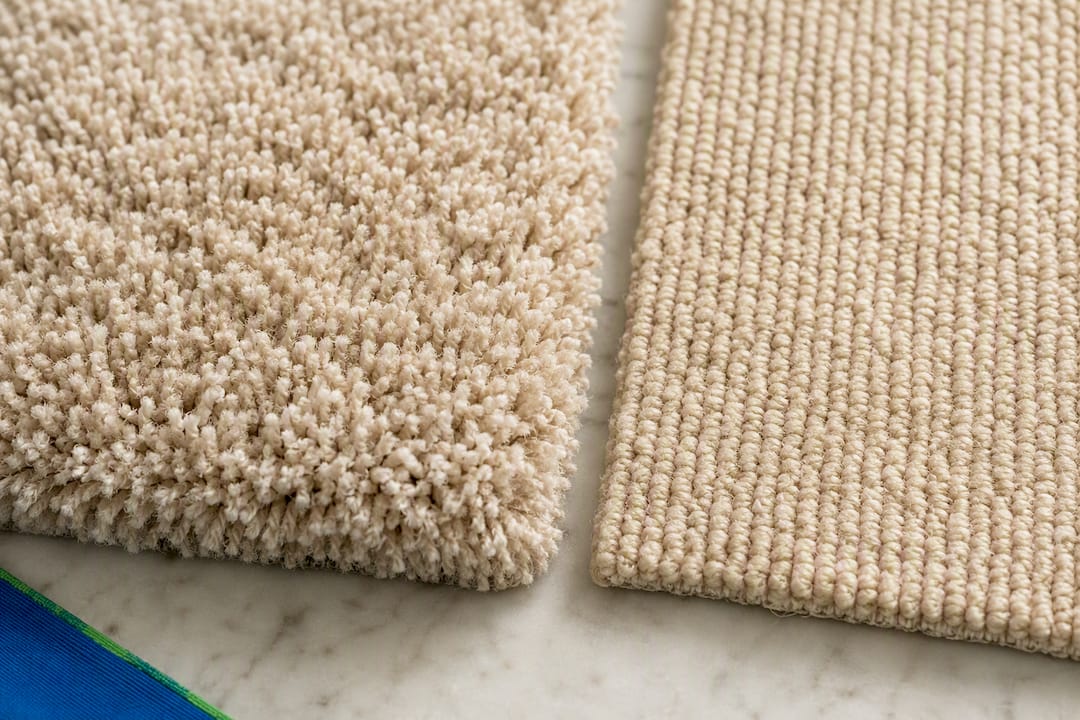
Fiber material plays a secondary role. Wool carpet, in particular, tends to hold moisture longer than synthetic fibers like nylon or polyester, which can extend the humid window mites need to reproduce. Synthetic fibers generally release trapped debris more readily during vacuuming, though the difference is smaller than pile height’s effect.
Carpet age and wear matter just as much as material. Older, matted carpet with worn or crushed fibers traps waste that a vacuum’s airflow and agitation can no longer reach effectively, regardless of what it’s made from. That’s part of why a “clean-looking” older carpet can still test high for allergens.
None of this means every allergy sufferer needs to rip out their carpet. It does mean that if you’re replacing flooring in a bedroom with a chronic allergy sufferer, low-pile carpet or an easily washable rug is a smarter long-term choice than plush pile, and that older, heavily worn carpet deserves more frequent professional attention than newer flooring in the same house.
Your Dust Mite Action Plan, Timed Out
Within the next 48 hours: vacuum bedrooms and high-traffic carpet with a HEPA-capable vacuum, wash all bedding on the hottest safe setting, and get a dehumidifier running toward that 50% relative humidity target.
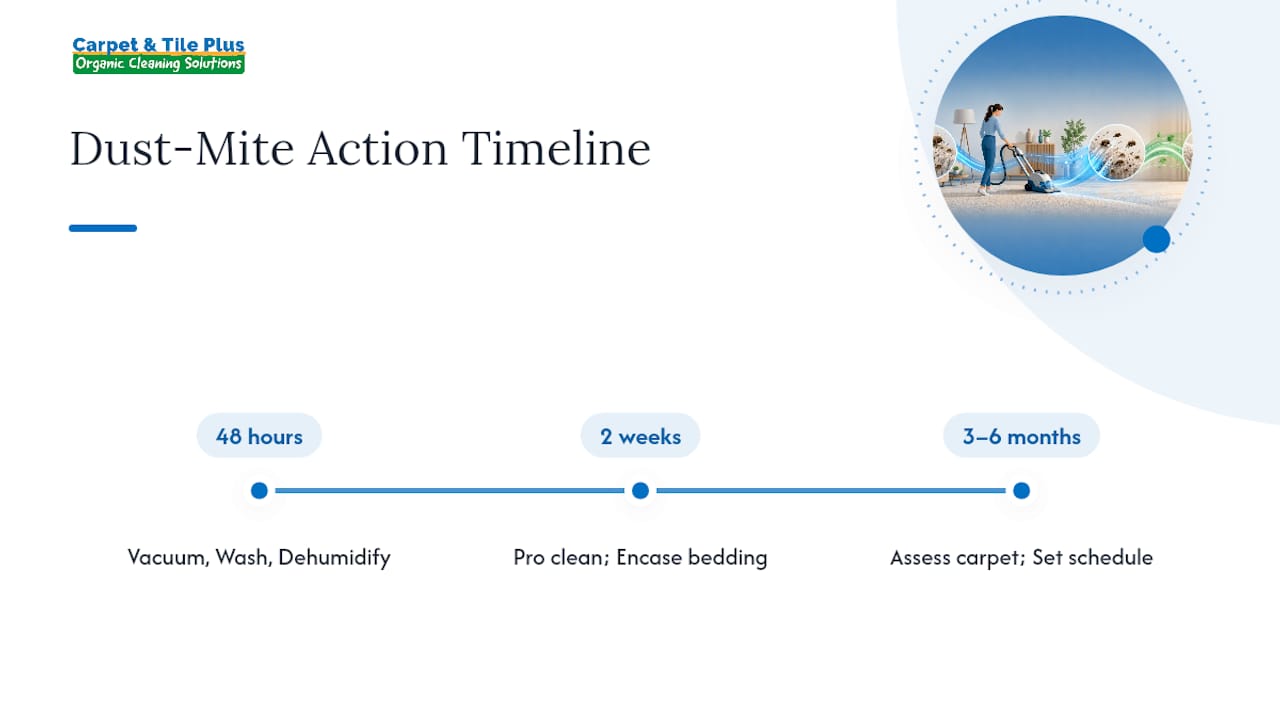
Within two weeks: book professional hot-water extraction or dry steam cleaning if symptoms haven’t improved, and get mattress and pillow encasements on every bed in the house.
Within three to six months: if symptoms are still dragging on, seriously weigh replacing high-pile bedroom carpet, and lock in a recurring cleaning schedule instead of waiting for symptoms to flare again.
When It’s Time to Call in Carpet & Tile Plus
If you’ve vacuumed twice a week, run the dehumidifier, and washed every pillowcase in hot water and you’re still waking up stuffy, that’s usually the point where DIY hits its ceiling. Carpet & Tile Plus is a local, family-owned alternative to guesswork: our IICRC-certified technicians run hot-water extraction and dry steam cleaning with organic products, and our carpets are dry again within about an hour, so you’re not left with a damp, humid carpet that just invites more mites back in.

A typical visit starts with an assessment of your carpet’s age, pile, and traffic pattern, since a plush bedroom carpet and a low-pile hallway runner don’t need identical treatment. We recommend professional cleaning as part of an ongoing plan, not a one-time fix, especially in bedrooms where allergy sufferers spend the most hours. For homeowners managing a bedding-specific setup, this guide to dust mite proof sleeping spaces pairs well with what we do on the carpet side. If you’re ready to see what a professional cleaning removes from your carpet, you can request a residential carpet cleaning quote and get a visit scheduled around your household’s timeline.
What We Get Wrong About “Dust Mite Free” Carpet
There’s no such thing as a dust mite free carpet, and chasing that goal is where a lot of allergy sufferers waste money and energy. The research doesn’t support total elimination through cleaning. It supports meaningful, sustained reduction, which is a different and more honest promise.
What frustrates me about a lot of allergy advice online is the framing that a single deep clean or a single “miracle” spray solves the problem permanently. It doesn’t. The intervention studies that hold up best all point the same direction: layered habits beat any single silver bullet. Vacuuming without humidity control just refills the reservoir. Encasements without hot laundering leave a gap. Steam cleaning without a maintenance vacuuming schedule buys you weeks, not permanence.
The honest goal is exposure reduction, not eradication. If you’re vacuuming twice a week, keeping humidity under 50%, washing bedding hot, and bringing in professional extraction on a schedule, you’ve done what the evidence actually supports. Symptom improvement, not a sterile carpet, is the realistic and achievable win here.
— Jim
This article is general information, not a substitute for advice from a qualified doctor. Consult a qualified healthcare professional about your own circumstances before acting on anything here.
Sources
For readers who want the underlying research: the Environmental Health Perspectives intervention study tested steam cleaning and vacuuming head to head. The Journal of Environmental Monitoring review breaks down HEPA vacuum limits. Clemson’s Home & Garden Information Center covers dust mite biology in plain language.
- Effects of physical interventions on house dust mite allergen levels in carpet, bed, and upholstery dust in low-income, urban homes — Environmental Health Perspectives (2001)
- Evaluation of HEPA vacuum cleaning and dry steam cleaning in reducing levels of polycyclic aromatic hydrocarbons and house dust mite allergens in carpets — Journal of Environmental Monitoring (2008/2018)
- House dust mites — Clemson Home & Garden Information Center
- Inactivation of dust mites, dust mite allergen, and mold from carpet — Journal article (2014)