
When several people in the same office sneeze, rub their eyes or get headaches by mid-morning, the heating and cooling system is a prime suspect. HVAC equipment can spread allergens, and it can also create them. Dirty filters, damp drip pans and wet ductwork all give mold and dust somewhere to build up. The good news is that most causes can be checked in a logical order, starting with the cheapest and easiest.
This guide is for office managers, property managers and business owners who are getting these complaints. It covers what the evidence says, how to tell an HVAC problem from ordinary seasonal allergies, what to fix first, and when to bring in outside help.
TL;DR
- HVAC systems can act as a pollutant source when filters are dirty or wet, or when microbial growth develops in stagnant drip-pan water or damp ducts, according to the EPA’s office occupant guide.
- Symptoms that fade after people leave the building point toward the building. Symptoms that persist or worsen call for a doctor.
- Start with filters, humidity (OSHA recommends 20% to 60%), standing water and carpet, before spending on bigger projects.
- If complaints continue after you have fixed the obvious problems, hire an independent indoor air quality specialist rather than guessing.
Table of Contents
- Why an office HVAC system can cause allergy-like symptoms
- Is it the HVAC, or is it just allergy season?
- How to investigate before you spend money
- What to fix first
- Our perspective
- When to call in outside help
- How we can help
- A simple prevention routine
- FAQ
- Sources
Why an office HVAC system can cause allergy-like symptoms
An HVAC system moves air through every room. Anything living in that air path travels with it. The EPA says that HVAC systems can be pollutant sources when filters are contaminated with dirt or moisture, or when microbial growth develops in stagnant water in drip pans or in damp duct areas.
The same EPA guide lists biological contaminants such as dust mite allergens, mold, bacteria and viruses as triggers for allergy-like symptoms and asthma episodes in office buildings. It ties them to inadequate maintenance, poor humidity control and water damage.
A large US study backs this up. The EPA’s BASE study of 97 office buildings found that poorly maintained humidification systems were associated with significantly more respiratory, eye, fatigue and skin symptoms. The same study found more respiratory symptoms where outdoor air intakes sat close to the ground. The researchers could not always name the exact exposure, but the pattern pointed to moisture-related HVAC parts that were not kept up.
So “the AC is making us sick” is not folklore. It is a real, documented pathway, though not the only one.
The usual culprits inside the system
- Loaded or damp filters. A filter that is overdue for replacement stops trapping particles and can become a growth surface if it gets wet.
- Drip pans with standing water. Condensate that does not drain is a textbook place for microbial growth.
- Humidifiers. Per the BASE findings above, these are the components most clearly linked to symptoms when neglected.
- Dusty or damp ductwork. Dust that settles in ducts gets stirred up when airflow changes. Moisture makes it worse.
- Low outdoor air supply. Ventilation dilutes pollutants. The EPA notes that ventilation rates cut for energy savings are often inadequate for health and comfort, so buildings have to balance air quality against energy use.
Is it the HVAC, or is it just allergy season?
Do not assume. The EPA points out that symptoms of poor indoor air can also come from stress, lighting, noise and other factors, so there is no single pattern. Health Canada adds that symptoms often mimic colds, flu or allergies, which is why they get missed.
OSHA lists the signs that suggest a building problem: musty odors, a stuffy or hot environment, and recurring symptoms such as headaches, fatigue, or eye and nose irritation that improve after leaving the building. Cough, fever or shortness of breath may point to a building-related illness, which is a different and more serious category.
The EPA’s term for the milder pattern is sick building syndrome. It describes acute health and comfort effects linked to time spent in a building, with no specific illness or cause identified, and most complainants feel better soon after they leave.
Clues that point to the building
| Clue | Leans toward the building | Leans toward outdoor or personal allergies |
|---|---|---|
| Where it happens | Specific floors, rooms or zones | Everywhere, including home and car |
| When it happens | Worse during the workweek, better on weekends | Tracks pollen counts or season |
| Who is affected | Several coworkers in the same area | Individuals with known allergies |
| Smell | Musty or damp odor near vents | No unusual odor |
| Recent events | Leak, roof issue, HVAC repair, renovation | None |
None of these proves anything alone. Together they tell you where to look first.
How to investigate before you spend money
The EPA’s building guide for owners and facility managers suggests a practical approach. Occupants can poll colleagues about comfort issues, and managers can build an indoor air quality profile and management plan. That is less formal than it sounds.
- Log the complaints. Record who, which area, what symptom, what time of day, and whether it eased after leaving. Ten minutes of tracking beats a dozen anecdotes.
- Map the pattern. Mark complaints on a floor plan next to the air handler zones. Clusters near one unit or one supply vent are informative.
- Walk the system. Check filter condition and installation date, look at drip pans for standing water, and note any musty smell near air handlers or vents.
- Look for water. Stained ceiling tiles, warped baseboards, damp carpet edges and window condensation all suggest moisture is getting in.
- Check humidity. A basic hygrometer in a few zones tells you whether you are inside the recommended range.
- Ask about recent changes. New carpet, a leak, a repaired roof, a switched cleaning product or a changed maintenance contractor can all explain a sudden spike.
What to fix first
OSHA’s technical manual lists the standard controls: adequate fresh outdoor air, filtration, humidity at 20% to 60%, temperature at 68 to 76 F, regular filter replacement, removal of contaminated porous materials and elimination of standing water. Here is how to turn that into a work order.
Filters and airflow
The EPA says properly installed and maintained filters can trap many particles from outdoor supply air. The words that matter are installed and maintained. Gaps around the filter frame let air bypass it, and a filter left in too long stops doing its job. Set a replacement schedule with your HVAC contractor and write the date on the filter. Ask whether your system can handle a higher-grade filter before you buy one, because a denser filter can restrict airflow if the equipment was not designed for it.
Ventilation
The EPA’s sick building factsheet cites ASHRAE Standard 62-1989, which recommended 15 cubic feet per minute of outdoor air per person as a minimum and 20 CFM per person for office space. Standards have been revised since then, so ask your mechanical contractor what your current design target is and whether dampers are actually delivering it. A system that was tuned down to save energy years ago is a common finding.
Humidity and moisture
Keep relative humidity between 20% and 60%, as OSHA recommends. Too dry irritates eyes and throats. Too damp feeds mold and dust mites. Fix leaks quickly, and dry wet materials fast. OSHA’s guidance includes removing contaminated porous materials and eliminating standing water, which in practice means drip pans, roof leaks and plumbing.
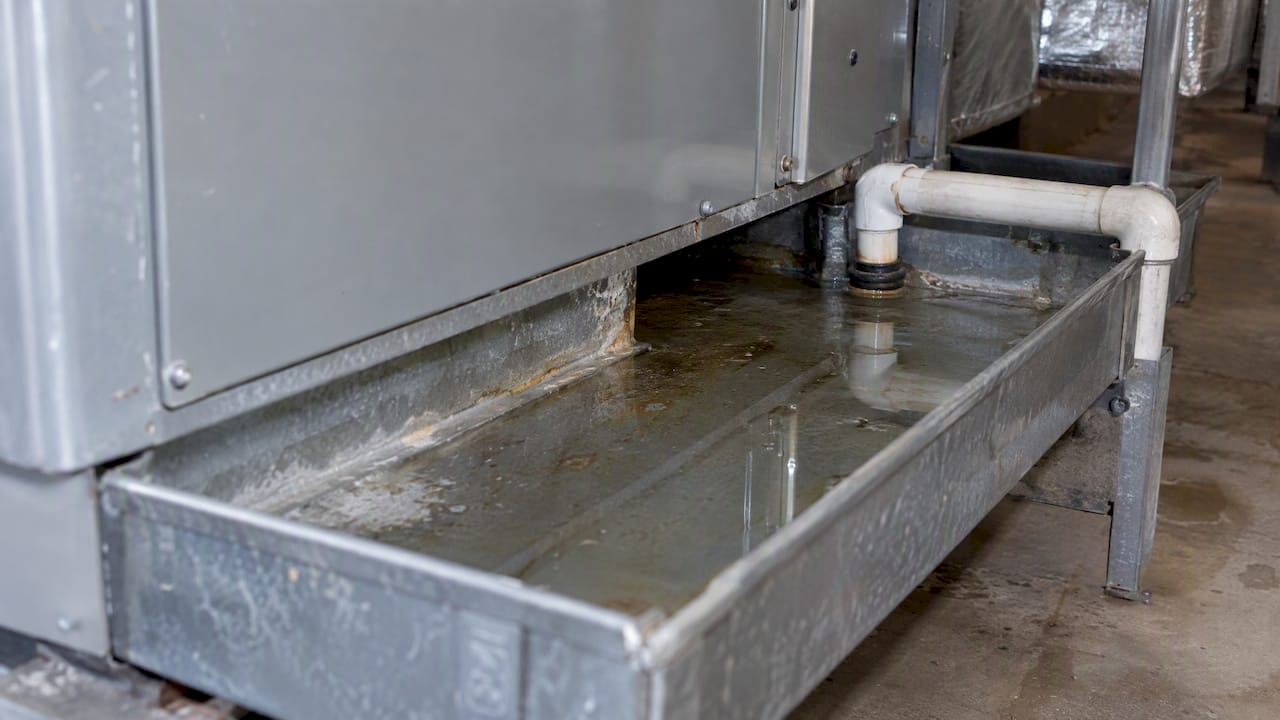
If moisture has already reached drywall or framing, the repair matters as much as the cleaning. A contractor guide on fixing or replacing water-damaged drywall explains how to judge when a wall can be dried and when it has to come out.
Duct cleaning: when it helps and when it does not
Duct cleaning is not a cure-all. It makes sense when you can see dust or debris coming out of vents, when there has been water in the system, when there are signs of mold, or after construction. It does not replace filter changes, humidity control or fixing leaks. If you are weighing it, our pages on whether air duct cleaning is worth it and the signs it is time to clean your ducts walk through the decision. The homeowner-focused material also applies to small offices in converted houses or storefronts, and covers how professional duct cleaning works.
Carpet and floors
Air moves dust around, but carpet stores it. Dust mite allergens, pollen tracked in on shoes and mold spores settle into fibers and get released when people walk or vacuum. Heavily trafficked office carpet that has not been deep cleaned in a long time can keep re-contaminating the air no matter how good the HVAC is.
Three practical points:
- Vacuum with a sealed, high-efficiency filter machine so you are not pushing fine dust back into the room.
- Schedule professional extraction on a regular cycle, and choose low-moisture methods so carpet is not left damp. Damp carpet is a moisture problem of its own.
- Clean hard floors and grout too. Grout is porous and holds soil and moisture in restrooms, break rooms and entries.
Our commercial office carpet cleaning checklist for managers covers what to schedule and how often, and our guide to dust mites in carpet explains why fibers hold on to allergens. For a practical look at the cleaning side, see allergy-friendly carpet cleaning.
Our perspective
We clean carpet, tile and grout, and air ducts for homes and businesses across Chicago’s northwest suburbs, and office allergy complaints are a pattern we recognize. Here is what we would tell a manager.
First, do not buy a single fix. Allergy complaints in an office are rarely caused by one thing. A clogged filter, a tired carpet and a humid summer can stack up, and fixing only one leaves the other two working against you.
Second, moisture is the thing to take seriously. Dust is a nuisance. Water is what turns dust into mold. That is why we use low-moisture methods and aim for a one-hour dry time on carpet. A cleaning that leaves a floor wet for a day can create the problem you hired us to solve.
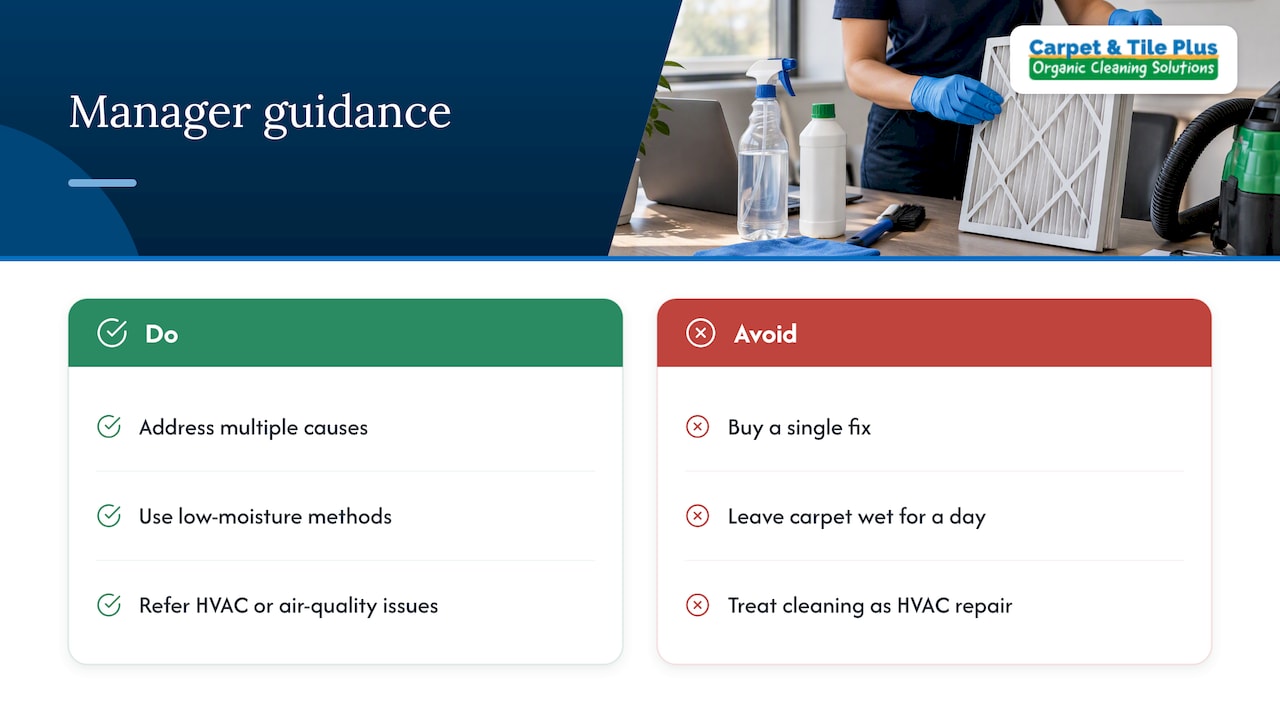
Third, be honest about what cleaning can and cannot do. We can remove embedded soil and allergens from carpet and grout, and clean ducts that are dusty or contaminated. We are not a substitute for an HVAC technician who fixes a drain pan, or an independent air quality specialist who diagnoses a stubborn building problem. When a job needs one of those, we say so.
Finally, we use organic cleaning products, and our technicians are IICRC-certified. For a workplace where people already feel irritated, what is left behind in the carpet matters as much as what is removed.
— Joe
When to call in outside help
Some situations are beyond routine maintenance.
- Symptoms that are not going away or are getting worse. OSHA’s advice is that these workers should talk to their doctor. That is a medical question, not a facilities one.
- Complaints that continue after you have fixed the basics. The OSHA technical manual says that if sick building syndrome is suspected, it is often advisable to contact an independent indoor air quality specialist. Colorado’s health department names the kind of professional to look for: an industrial hygienist or environmental consultant.
- Fever, cough or shortness of breath. OSHA says these may point to a building-related illness, so employees should see a doctor promptly.
- Visible mold or a known water intrusion. Treat it as a remediation job, not a cleaning job.
An independent specialist matters because they have nothing to sell you afterward. They measure, diagnose and write up what they find, and then you choose who does the work.
What about employees who stay symptomatic?
The OSHA technical manual says that occupants with hypersensitivity should be thoroughly evaluated and the source of the problem identified and corrected. If symptoms persist after remedial action, it says the affected person should be considered for reassignment. For a manager, that means fixing the building first, documenting what you did, and then having a conversation about the individual’s situation. If accommodation questions come up, speak with HR or an employment attorney, since your obligations depend on the situation.
How we can help
We handle the cleaning side of this problem for offices and other commercial spaces in Arlington Heights, Palatine, Elgin, Schaumburg-area neighbors and the rest of the northwest suburbs we serve.
- Commercial carpet cleaning is listed on our site at $200 to $500 per one-off job, depending on the space. Low-moisture methods mean a one-hour dry time, so your team is back at their desks quickly.
- Commercial tile and grout cleaning for restrooms, break rooms and entries.
- Air duct cleaning when ducts are dusty, were exposed to water, or have not been looked at in years.
Tell us what your employees are reporting and we will tell you honestly which of these, if any, is likely to help.
A simple prevention routine
Once the immediate problem is handled, keep it from returning.
| Task | Suggested frequency |
|---|---|
| Check and replace HVAC filters | On the schedule your HVAC contractor sets for your equipment |
| Inspect drip pans and drains | At each HVAC service visit |
| Read humidity in several zones | Monthly, more often in humid months |
| Vacuum with a sealed, high-efficiency machine | Per your cleaning contract, more in high-traffic areas |
| Professional carpet and grout cleaning | Set by traffic level; high-traffic areas need more |
| Walk for leaks and stains | After heavy rain and each season |
| Review complaint log | Quarterly |
These frequencies are starting points. Your equipment, building and occupancy decide the real schedule.
FAQ
Can HVAC systems cause allergies?
They do not create an allergy in a person, but they can cause allergy-like symptoms and set off existing ones. The EPA says dirty or wet filters, stagnant drip-pan water and damp ducts can become pollutant sources. Mold, dust mite allergens and other biological contaminants then circulate with the air.
Do workplaces have to accommodate allergies?
It depends on the situation, and this article cannot give legal advice. OSHA’s technical manual says that a hypersensitive employee’s building problem should be evaluated and corrected, and reassignment considered if symptoms persist afterward. For specific obligations, talk to HR or an employment attorney.
Can I call off work due to allergies?
If symptoms are bad enough that you cannot work, that is a question for your doctor and your employer’s sick leave policy. OSHA says workers whose symptoms are not going away or are getting worse should see a doctor. Noting whether symptoms improve away from the building helps your doctor.
What is the best HVAC setup for people with allergies?
There is no single product. The basics are fresh outdoor air at the right rate, properly installed filters changed on schedule, humidity between 20% and 60%, and no standing water in the system. Ask a qualified HVAC contractor what filter grade your equipment can handle without losing airflow.
Sources
- An Office Building Occupant’s Guide to Indoor Air Quality, EPA
- Risk factors in heating, ventilating, and air-conditioning systems, PubMed
- Sick Building Syndrome factsheet, EPA
- Do You Suspect Your Office Has an Indoor Air Problem?, EPA
- Guidance on improving indoor air quality in office buildings, Health Canada
- Indoor Air Quality FAQs, OSHA
- Building Air Quality Guide, EPA
- OSHA Technical Manual, Section III, Chapter 2
- Defining an indoor air quality problem, Colorado Department of Public Health and Environment