
Orange or pinkish-orange stains on grout almost always come from one of three things: a bacterial biofilm, iron in your water, or soap scum that has trapped one of the first two. Each needs a slightly different fix, and the wrong one (usually bleach and a hard scrub) can leave you with stains that return within weeks. This guide shows you how to tell them apart, what to use, and when the problem is bigger than your grout.
TL;DR
- Orange grout in a shower is most often a bacterial biofilm, not mold. Physical agitation plus hydrogen peroxide beats bleach.
- If every fixture in the house is stained orange, suspect iron in your water, not your cleaning routine. Private wells are the usual cause.
- Stains come back wherever grout stays damp. Dry surfaces and lower humidity matter as much as the cleaner.
- Porous, old or deeply stained grout often can’t be fully cleaned at home. Professional cleaning and sealing is the lasting fix.
Table of Contents
- What causes orange stains on grout?
- A quick way to tell which one you have
- How to remove orange stains from shower grout
- When the problem is your water, not your shower
- Keep orange stains from coming back
- Our perspective: why orange grout keeps coming back
- When to call a professional
- Grout cleaning from Carpet and Tile Plus
- FAQ
- Sources
What causes orange stains on grout?
Grout is porous. It soaks up water, soap and whatever is living in that water, which is why it stains long before the tile does. Three causes account for nearly every case.
Bacterial biofilm (the most common culprit in showers)
Many homeowners assume orange or pink growth is mold. Researchers such as Shanina Knighton at Case Western Reserve University point out that these colonies are usually bacteria, not a fungus, and that the slimy film they form is harder to break through than people expect. A bacterium often blamed is Serratia marcescens, which thrives on moisture and soap residue.
Clues it’s biofilm:
- The color is orange, salmon or pink, and slightly slimy or filmy to the touch.
- It starts in the corners, along the shower floor, or at the base of the wall where water sits.
- It wipes off partly with a toothbrush, then reappears in a few weeks.
Iron and minerals in the water
Iron dissolves easily in groundwater. Ohio State University Extension notes that it is commonly found in well water, and while it isn’t a health issue, it stains fixtures and clothing. Rust-colored deposits form where iron-rich water dries repeatedly, and grout is a perfect place for them to settle.
Clues it’s iron:
- The stain is rust-brown or reddish-orange and feels gritty or hard rather than slimy.
- Toilets, sinks, tubs, laundry and even light-colored dishes show the same color.
- The water has a metallic taste.
Soap scum and body-care products
Soap, shampoo and body oils leave a film. Tinted products and hard-water minerals can turn that film yellow-orange over time. On its own, scum is the easiest of the three to remove, but it also gives biofilm and minerals something to cling to.
A quick way to tell which one you have
| What you see | Likely cause | Where to start |
|---|---|---|
| Slimy orange or pink film, mostly in the shower | Bacterial biofilm | Hydrogen peroxide and a soft brush |
| Gritty rust-colored stains on every fixture | Iron in the water | Test the water; treat the source |
| Dull yellow-orange haze, wipes off with a cleaner | Soap scum | Alkaline or pH-neutral grout cleaner, then rinse |
| White crusty powder on grout | Efflorescence (mineral salts) | Different problem; see below |
| Orange stain that returns days after cleaning, even on dry-looking grout | Moisture trapped in porous grout | Deep clean and seal |
If you’re unsure, our diagnostic checklist for the causes of grout discoloration walks through the clues in more detail. And if what you see is a white powder rather than an orange tint, that’s usually efflorescence, covered in our guide to removing it.
How to remove orange stains from shower grout
Start gentle. You can always escalate, but you can’t undo damage to grout.
- Ventilate. Run the exhaust fan and open a window. Wear gloves.
- Rinse and wipe. Remove loose soap scum with warm water and a soft cloth.
- Apply 3% hydrogen peroxide. Spray or dab it directly onto the grout lines and let it sit for 10 to 15 minutes. Hydrogen peroxide is often recommended over bleach for breaking through the slimy film bacteria produce, according to the Case Western Reserve guidance.
- Agitate. Scrub with a soft nylon brush or an old toothbrush. The agitation does much of the work, since the film has to be physically broken up.
- Rinse thoroughly with clean water, then dry the area with a squeegee or towel.
- Repeat once if needed. If the color is still there after two rounds, it is probably embedded in the grout rather than sitting on top.
Why we steer people away from bleach and steel brushes
Bleach is the default for most households, but it isn’t a cure-all. The EPA says bleach is not recommended as a routine, one-size-fits-all practice for mold cleanup, because it is neither possible nor desirable to sterilize a home, and the real fix is dealing with the moisture. The same logic applies to biofilm: kill the surface layer and, if the grout stays wet, it grows back.
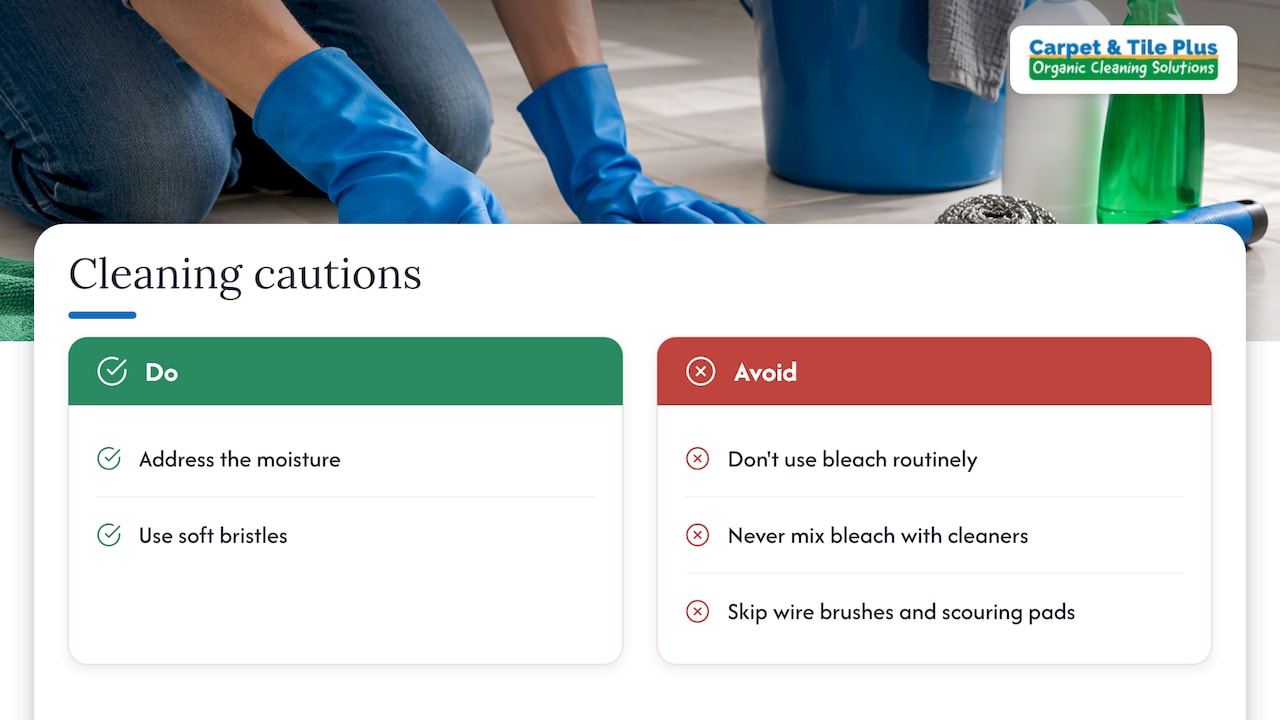
If you do use bleach, never mix it with other cleaners. Ammonia, vinegar and some toilet-bowl products can release dangerous gases when combined with it.
Abrasive tools are the other trap. Researchers warn that overly harsh scrubbing, especially on new or delicate grout, creates micro-scratches, and those give bacteria and minerals more surface to grip. Stick with soft bristles. Skip wire brushes and scouring pads.
Kitchen-cabinet remedies: do they work?
Pastes made from baking soda, vinegar and salt show up in a lot of online threads. They can lift light soap scum and surface mineral film. Two cautions:
- Vinegar and other acids can etch cement grout and some natural stones such as marble, travertine and limestone. Test on a hidden spot first, and don’t use acids on natural stone.
- None of these will reach stain that has soaked deep into porous grout.
When the problem is your water, not your shower
Here’s the sign that changes everything: orange staining on every fixture that returns no matter how well you clean. In that case the grout is only where you notice it.
Iron bacteria are a common cause in homes on private wells. They form a protective slime, which is why standard surface cleaning doesn’t stop them. The Ohio State fact sheet says persistent cases may need periodic shock chlorination of the well system by a professional. University of Georgia water specialists add that iron creates reddish-brown stains in sinks, fixtures, laundry and toilets and promotes iron bacteria growth in plumbing.
What to do:
- On a private well: have the water tested by a certified lab, and talk to a licensed water treatment or well contractor about the results. Some of our Northwest Suburbs customers, particularly in the more rural edges, are on wells rather than municipal water.
- On municipal water: iron staining is less common. Look at moisture and cleaning habits first, then call your water utility if every fixture is affected.
No amount of grout cleaning will fix a water-source problem, and we would rather tell you that than book a visit that can’t solve it.
Keep orange stains from coming back
The stain is a symptom. The cause is water that sits on grout. These habits do more than any product.
- Dry the surface after each shower. The CDC’s mold guidance advises keeping indoor humidity below 50% and making sure bathroom exhaust fans vent directly outdoors. Wiping with a squeegee or towel after use denies bacteria and mineral deposits the water they need.
- Run the fan longer. Leave it on for 20 to 30 minutes after you finish showering.
- Manage whole-house humidity. If your bathroom stays damp even with the fan on, look at the rest of the house. This article on controlling excess indoor humidity explains how moisture builds up and why stopping the water source comes first.
- Use a pH-neutral cleaner weekly. Soap scum is food for biofilm. Keep it off.
- Move shampoo bottles and bath mats. Anything that traps water against grout keeps it damp.
- Seal clean grout. Sealing slows water absorption. Seal only after the grout is truly clean and dry, or you lock the stain in.
The pages on how grout porosity affects your cleaning method and how cleaning prepares grout for sealing go deeper on why this order matters.
What about epoxy grout?
Epoxy grout resists water and staining much better than standard cement grout, and it is worth discussing with your tile installer if you’re re-tiling a shower. It’s a remodeling decision, though, and it won’t help the grout you already have.
Our perspective: why orange grout keeps coming back
We clean tile and grout for homeowners and businesses across the Northwest Suburbs of Chicago, and orange stains are a call we hear again and again. Here is how we see it.
Most people who call us have already tried bleach, a scrub brush and a bottle of something from the hardware store. The stain faded for a week or two, then returned. That pattern tells us the surface was cleaned but the grout was not. Grout is a sponge, and what sits deep inside keeps feeding the stain.
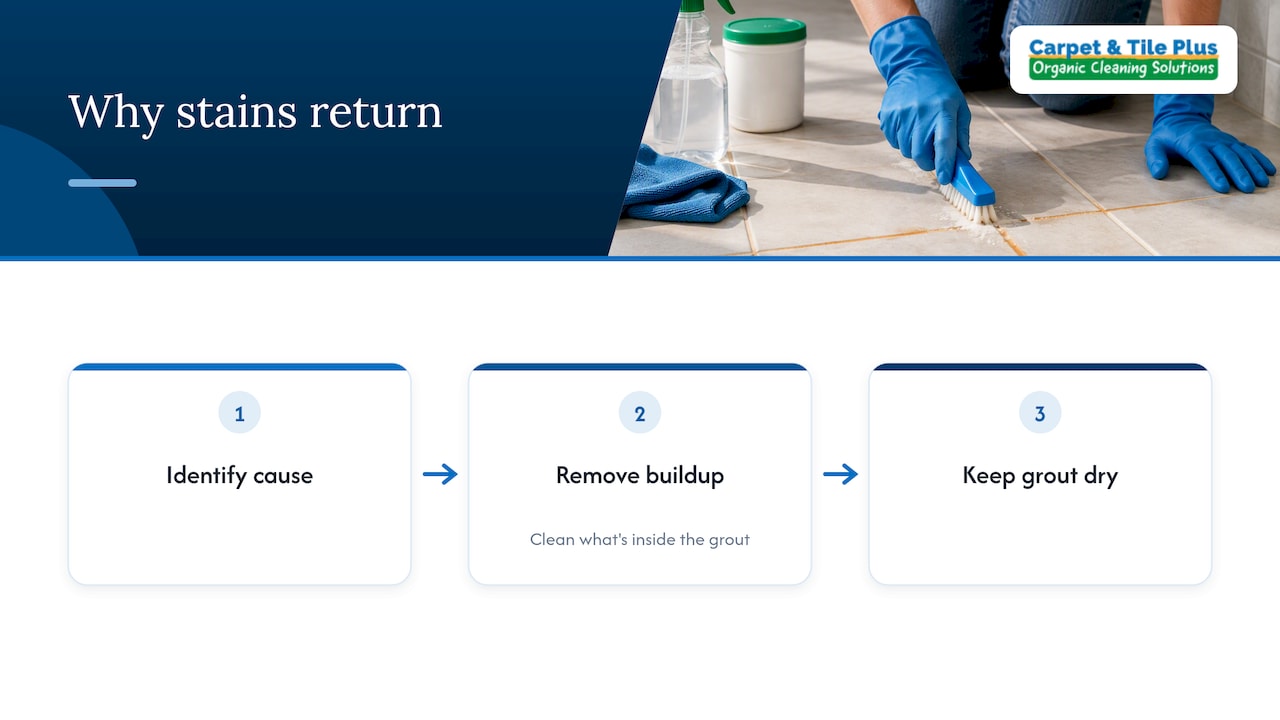
So we think about it in layers: identify the cause first, remove what’s inside the grout, then help the homeowner keep it dry. Our IICRC-certified technicians use organic cleaning products, and we use low-moisture methods that let surfaces dry in about an hour, so your bathroom or kitchen is back in use the same day. We back our work with a 100% satisfaction guarantee.
Our honest advice: try the peroxide method once or twice. If it works, great, and keep up the drying habits. If the color keeps coming back, the grout is porous, damaged, or the problem is not the grout at all. That is when professional cleaning and sealing earns its price, and when a water test might be the smarter first call.
— Joe
When to call a professional
Home methods have limits. Consider professional help when:
- You’ve cleaned twice and the color is still there.
- The grout is old, crumbly, cracked or very porous.
- The stain covers a large area, such as an entire shower, kitchen floor or entry.
- You manage a commercial space, like a restroom, break room or kitchen, where stained grout affects appearance and sanitation.
- You’re getting ready to sell or to seal the grout and want a clean starting point.
Professional cleaning reaches deeper than a brush can. For more on what it does for the long run, see how professional cleaning extends grout life and real transformation examples from deep grout cleaning.
Also call a professional, but a different one, if you see widespread black growth, a musty smell, or you know there has been water damage. Hidden moisture may need a repair or remediation contractor before cleaning makes sense. The EPA’s mold cleanup guidance notes that mold can cause staining and cosmetic damage and that professionals may use methods beyond home cleaning.
Grout cleaning from Carpet and Tile Plus
If the stain won’t budge, we can help. We provide residential tile and grout cleaning for homes in Arlington Heights, Bartlett, Barrington, Elgin, Elk Grove Village, Hoffman Estates, Lake Zurich, Mount Prospect, Palatine, Rolling Meadows, Streamwood and nearby communities, and commercial tile and grout cleaning for local businesses. Our non-toxic approach is described on our IICRC-certified grout cleaning page. We don’t publish a set price for grout work, so reach out through the page and we’ll talk through your project.
FAQ
What causes my shower grout to turn orange?
Usually bacteria growing in damp soap residue, which forms a slimy orange or pink film. Iron in the water and soap scum are the other common causes. If every fixture in your home shows the same color, the water source is the likelier culprit.
Is orange grout stain mold?
Usually not. Researchers say orange growth is most often a bacterial biofilm rather than a fungus, which is why anti-fungal approaches can disappoint. Black, green or fuzzy growth is more likely true mold, and the CDC advises cleaning it up whenever you see or smell it.
Does bleach remove orange stains from grout?
It may lighten them, but it often isn’t the best tool for biofilm, and the EPA doesn’t recommend it as a routine practice. Hydrogen peroxide with a soft brush is a gentler place to start. Never combine bleach with other cleaners.
How often should I clean my shower to prevent stains?
A quick squeegee or towel wipe after each shower and a weekly cleaner pass is a practical routine. Run the exhaust fan for a while after showering. The key is not letting water and soap film sit on the grout.
Why do the stains keep coming back after I clean them?
The grout is probably still damp, porous or holding stain below the surface, or the source is your water. Improve drying and ventilation first. If that doesn’t help, deep cleaning and sealing, or a water test on a well, are the next steps.
Sources
- Case Western Reserve University: Shanina Knighton explains causes of red grout stains
- US EPA: Should I use bleach to clean up mold?
- US EPA: Mold cleanup in your home
- CDC: Mold
- Ohioline (Ohio State University): Iron in Drinking Water