
Don’t. Wait until your carpet is mostly dry, and if you absolutely have to cross it, stick to clean socks or a temporary path instead of shoes or bare feet. Most homes fall into a 4 to 12 hour window before regular foot traffic is safe again, though low-moisture cleaning methods can cut that down to under two hours. If you can’t avoid a crossing:
- Pull off your shoes before stepping on it
- Use clean socks, never bare feet or shoes with tread
- Lay down a towel or plastic runner along your path
- Keep pets off the carpet until it’s surface-dry
Quick callout: Hot-water extraction typically needs several hours before light foot traffic is safe, while low-moisture cleaning often allows walking almost immediately.
Key Takeaways
Waiting until carpet is fully dry, not just dry to the touch, is what actually protects your cleaning investment and prevents mold.
| Point | Details |
|---|---|
| Default wait time | Give hot-water extraction 4 to 6 hours before light traffic and up to 24 hours for full use in humid rooms. |
| Low-moisture is faster | Encapsulation and VLM cleaning often allow light foot traffic almost immediately. |
| Test before trusting | Press a clean white towel into the pile; if it comes away damp, the carpet needs more time. |
| Speed drying with airflow | Combine HVAC, box fans, and a dehumidifier rather than relying on one method alone. |
| Choose fast-dry professionals | Carpetandtileplus offers IICRC-certified cleaning with organic products and a one-hour dry time for homes across the Northwest Suburbs of Chicago. |
Table of Contents
- Why Walking on Wet Carpet Causes Real Damage
- How Long Should You Wait to Walk on Wet Carpet?
- How to Dry Wet Carpet Faster After Cleaning
- What to Do if You Must Cross a Wet Carpet
- When Does Wet Carpet Start Growing Mold?
- What Certified Carpet Cleaners Do Differently
- A Publisher’s Take on Wait Times
- Get Faster Drying Without Sacrificing a Deep Clean
- Frequently Asked Questions
- Sources
Why Walking on Wet Carpet Causes Real Damage
Wet carpet fibers behave differently than dry ones. When they’re saturated, the pile loses its structure temporarily, and pressure from feet or furniture legs can flatten it in ways that don’t bounce back. Walk the same path enough times while it’s still damp, and you’ll set a permanent traffic lane that shows up as a slightly different sheen or texture months later.
There’s also the cleaning-effectiveness problem. You just paid to have oils, dirt, and allergens lifted out of that carpet, and every wet footstep has the potential to drag some of it right back in from your shoes or feet. Foot traffic on damp carpet reintroduces soil and can undo part of what the cleaning accomplished, which is part of why professionals build drying time into their service recommendations.
Then there’s the moisture-migration issue. Pressing down on wet fibers pushes water deeper into the carpet, toward the backing and pad underneath. That’s where things get harder to fix, since backing and padding dry far slower than the visible surface and trap moisture longer if it’s driven downward.
- Fibers compress and can hold that shape once dry
- Footsteps re-soil freshly cleaned carpet
- Pressure pushes water into backing and padding, slowing overall dry time
Pro Tip: Check your highest-traffic paths, hallways, and doorways first after any cleaning. These spots dry slower because they’re often given an extra cleaning pass, and they’re the areas most likely to get walked on before the rest of the room is even close to dry.
How Long Should You Wait to Walk on Wet Carpet?
There’s no single number here, because drying time depends heavily on which cleaning method your carpet just went through. Drying time can range from under an hour to more than 24 hours depending on method, fiber type, and how well the room is ventilated.
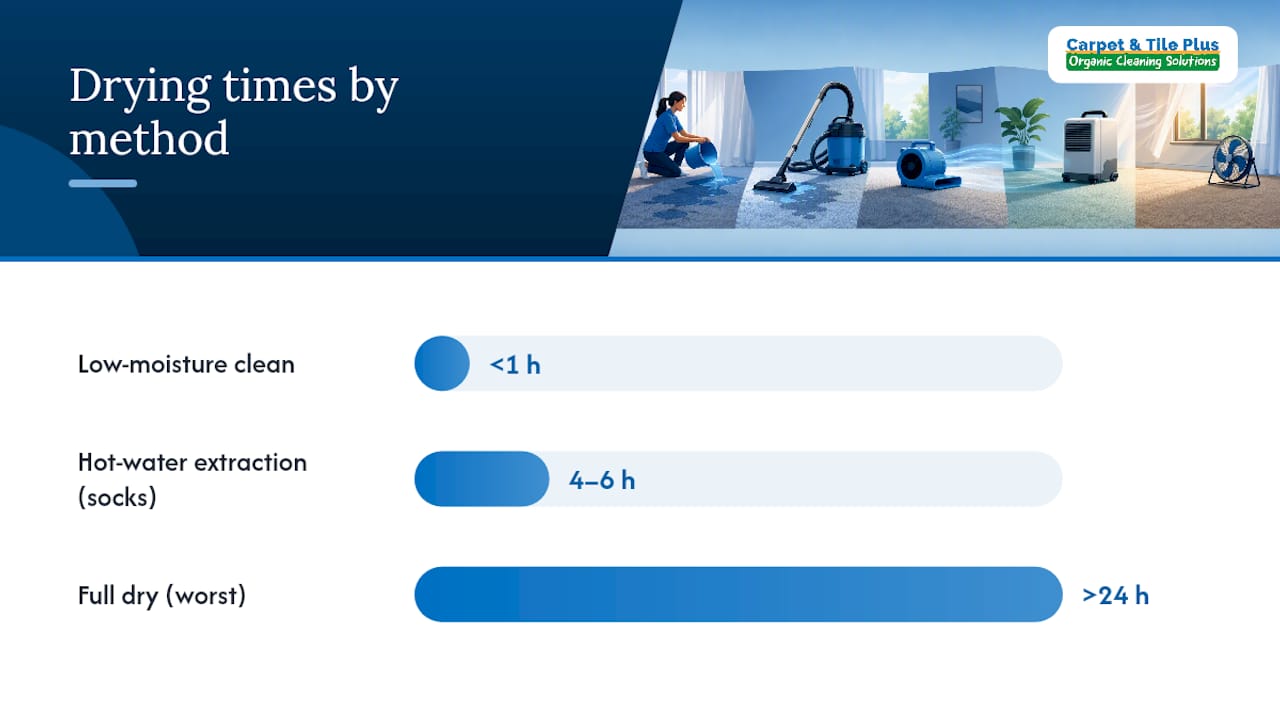
Low-moisture cleaning, sometimes called encapsulation or VLM, uses a fraction of the water that traditional steam cleaning does. Light foot traffic is often fine shortly after a low-moisture clean(https://begreencarpetcleaning.com/guides/how-long-does-carpet-take-to-dry-after-cleaning/), while hot-water extraction, the deeper steam-based method, generally needs 4 to 6 hours before you should walk on it with socks, and longer before it’s ready for normal shoes and furniture.
A handful of factors push that window wider or narrower:
- Cleaning method: low-moisture vs. hot-water extraction
- Airflow: whether HVAC, fans, or open windows are moving air across the carpet
- Temperature and humidity: cold, damp rooms dry much slower
- Fiber type and pile height: thick, plush pile holds water longer than low-pile berber
- Soil level: heavily soiled carpet needed more water to clean, so it takes longer to dry
- Pad and backing: denser padding traps moisture and extends true dry time
Surface-dry and fully dry aren’t the same thing. Carpet can feel dry to the touch while the backing and pad underneath are still damp, which is why a quick touch test on top isn’t enough on its own. A more reliable check: press a clean white towel firmly into the pile for a few seconds. If it comes away damp or shows any transferred color, the carpet needs more time. This white towel test is a standard way pros confirm backing dryness before clearing a room for normal use. Save furniture replacement for later in the day or the next morning, especially with thicker pile or limited airflow.
How to Dry Wet Carpet Faster After Cleaning
Speeding up drying isn’t complicated, but the order you do things in matters. Work through these steps roughly in sequence:
- Open windows if the weather outside is dry and mild. Fresh air moving through beats stagnant indoor air every time.
- Run your HVAC or AC. Circulating, dehumidified air pulls moisture out of carpet fibers faster than still air ever will.
- Add box fans aimed low, across the carpet surface rather than straight down. Airflow across the fibers evaporates surface moisture quickly.
- Position fans to create cross-ventilation. One fan pushing air in, another pulling it out, dries a room far more evenly than a single fan in a corner.
- Run a dehumidifier in the room, especially if humidity outside is high or the space doesn’t ventilate well.
- Re-extract if needed. If the carpet still feels soaked rather than damp, a second pass with the extractor pulling water back out beats waiting it out.
Blotting with towels only moves surface water around. Extraction actually removes it, which is why a second extraction pass often shortens total dry time more than an extra fan does. Vacuuming wet carpet, on the other hand, pushes water deeper and can damage your vacuum, so hold off on that until everything’s fully dry.
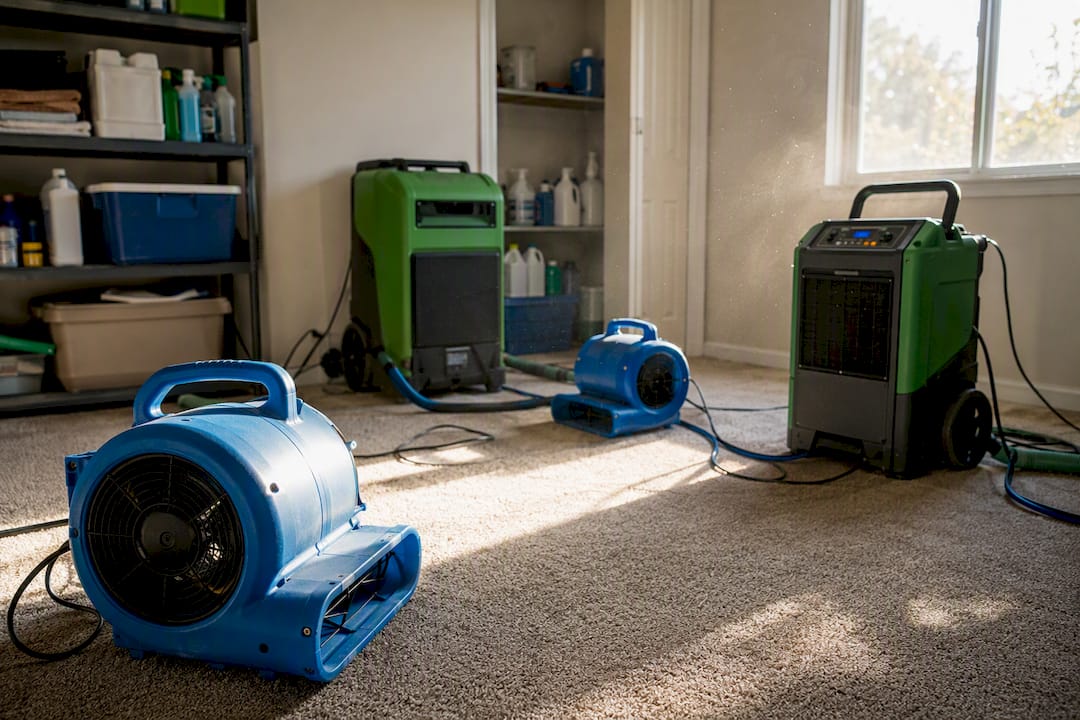
Pro Tip: Household box fans work, but they move a fraction of the air that professional-grade air movers do. If a room isn’t drying within the expected window, a certified cleaner can bring in commercial air movers and desiccant dehumidifiers that cut drying time dramatically, especially useful for basements or rooms with poor natural ventilation. Our guide on quick-dry carpet cleaning methods breaks down which situations call for that extra equipment.
What to Do if You Must Cross a Wet Carpet
Sometimes waiting isn’t realistic. A toddler needs the bathroom, the dog needs out, or someone’s coming through with groceries. When crossing is unavoidable:
- Wear clean, dry socks. No shoes, no bare feet.
- Lay a towel or plastic runner along the exact path you’ll take and stick to it.
- Move in a single file line rather than wandering, to avoid creating multiple damp traffic lanes.
- Keep pets off the carpet entirely until it’s at least surface-dry.
- If you track dirt or a stray footprint onto the damp carpet, blot it immediately with a clean white cloth rather than rubbing, which can grind soil deeper into wet fibers.
A single careful crossing rarely causes lasting harm. Repeated, careless ones are what actually flatten fibers and undo the cleaning.
When Does Wet Carpet Start Growing Mold?
Moisture that lingers too long is where wet carpet stops being a cosmetic issue and starts being a health one. Waiting at least 6 to 8 hours, and sometimes up to 24 hours in humid or poorly ventilated rooms, is what many professionals recommend to keep mildew and mold risk low. The risk climbs fastest in basements, rooms without HVAC access, and anywhere humidity sits high.
Watch for these warning signs:
- A musty smell that doesn’t fade as the carpet dries
- Discoloration or dark spotting, especially near baseboards
- Dampness that persists well past the expected drying window for your method
If a carpet still feels wet or smells musty a full day after a hot-water extraction, something in the drying process didn’t work as it should, whether that’s trapped moisture in the pad, poor airflow, or an underlying leak.
If you suspect mold has already started, don’t seal the room up or push furniture back into place. Keep a dehumidifier running, maximize airflow, and call a professional for an inspection rather than trying to mask the smell.
What Certified Carpet Cleaners Do Differently
IICRC-certified technicians don’t use one method for every carpet. They match the cleaning approach to the fiber type and soil load, because a heavily soiled wool carpet and a lightly soiled synthetic one dry on completely different timelines even with identical equipment. That decision upfront is what keeps drying times predictable instead of a guessing game.
A typical professional workflow includes:
- Pre-inspection of fiber type, pad condition, and existing moisture
- Targeted extraction rather than blanket over-wetting
- Air movers and dehumidifiers positioned immediately after cleaning
- A post-job walkthrough with specific drying guidance for the homeowner
Pro Tip: Before your cleaner packs up, ask three questions: what’s the estimated dry time for this specific job, which rooms or areas need extra restriction, and should you expect a follow-up check. A good technician will have specific answers, not vague reassurances. Understanding how different carpet fibers respond to cleaning helps explain why your neighbor’s carpet dried in three hours while yours needed eight.
A Publisher’s Take on Wait Times
Homeowners consistently underestimate drying time because the carpet looks dry within an hour or two. It usually isn’t. Our best-practice advice: treat 6 to 8 hours as the baseline for hot-water extraction, and use socks-only rules during that window even if the surface feels fine underfoot. Our IICRC-certified technicians and one-hour dry-time options exist specifically to shrink that waiting period without cutting corners on the clean itself. When you’re unsure, call a professional instead of guessing.
Get Faster Drying Without Sacrificing a Deep Clean
Waiting half a day for carpet to dry isn’t always realistic, especially in a busy household or a business that can’t rope off a room until tomorrow. Carpetandtileplus built its process around that exact problem: organic cleaning products paired with IICRC-certified technicians and equipment tuned for a one-hour dry time, so you get the deep clean of hot-water extraction without the all-day waiting window it usually demands.

If your carpet has stayed damp longer than it should, smells musty, or you just want a cleaning that won’t keep your family off the floor all afternoon, our residential carpet cleaning service serving the Northwest Suburbs of Chicago is built for exactly that. Reach out and get a quote for your home today.
Frequently Asked Questions
How long does wet carpet take to dry?
Most hot-water extraction jobs dry within 4 to 12 hours depending on airflow, humidity, and pile thickness. Low-moisture cleaning often dries quickly.
How long can carpet be wet before damage occurs?
Light, careful foot traffic in clean socks for short crossings rarely causes lasting harm. Repeated walking or heavy foot traffic while carpet is still saturated is what causes fiber matting and re-soiling.
How long until mold grows on wet carpet?
Mold risk climbs the longer moisture sits trapped, particularly past the 24 hour mark in humid or poorly ventilated rooms. A musty smell or discoloration that doesn’t clear as the carpet dries is a sign to call a professional.
Will wet carpet dry on its own?
Yes, but slowly and unevenly without help. Adding airflow through HVAC, fans, or a dehumidifier cuts drying time significantly compared to leaving a room sealed and still.
Sources
Guidance in this article draws on IICRC-aligned professional standards and industry drying-time research.
- Carpet Drying Time: A Pro Operator Guide (2026)
- How Long Does Carpet Take to Dry After Cleaning? | VLM vs Steam
- Carpet Drying Time After Professional Cleaning: What to Expect | Carpet Cleaning Authority
- Why Can’t You Walk On Carpet After Cleaning? — Newpoint
- How Long Does Carpet Take To Dry After Cleaning?