
Encapsulation carpet cleaning is a low-moisture method that uses polymer-based detergents to surround soil particles, crystallize them as the solution dries, and remove them through dry vacuuming. Unlike hot water extraction, this method leaves carpets dry and ready for foot traffic within 30 to 60 minutes. The National Carpet Cleaning Authority classifies encapsulation as an interim maintenance method rather than a restorative technique, which is the single most important distinction homeowners and business owners need to understand before choosing it. Acrylic polymers do the heavy lifting here, and knowing how they work helps you use this method correctly.
How does the encapsulation carpet cleaning process work?
The encapsulation carpet cleaning process follows four distinct steps, and skipping any one of them produces noticeably worse results.
-
Pre-vacuum the carpet thoroughly. Loose dry soil must be removed before you apply any cleaning solution. If you skip this step, the polymer detergent spends its capacity binding to surface debris instead of the embedded grime you actually want to remove. A commercial-grade upright vacuum with strong suction is the right tool here.
-
Apply the polymer-based detergent. The solution is sprayed or applied with a rotary machine, a cylindrical brush machine, or a bonnet pad. The mechanical agitation works the detergent deep into the carpet fibers. Acrylic and styrene-maleic anhydride copolymers in the formula surround each soil particle and begin the encapsulation process on contact.
-
Allow the solution to crystallize. This is where the chemistry earns its keep. The polymers crystallize around soil particles as the moisture evaporates, forming brittle, dry crystals that release from carpet fibers easily. Dwell time is typically 20 to 30 minutes, though humidity and airflow in the room affect how quickly this happens.
-
Post-vacuum to remove encapsulated soil. Once the crystals are fully dry and brittle, a thorough vacuuming pulls them out of the carpet. This final step is where the cleaning actually happens. Weak vacuuming at this stage leaves residue behind and defeats the purpose of the method.
Pro Tip: Open windows or run an HVAC fan during the dwell period. Good airflow accelerates crystallization and reduces the risk of the carpet staying damp long enough to attract new soil before you vacuum.
A well-formulated encapsulating detergent combined with proper mechanical agitation and vacuum recovery can achieve cleaning rates of 2,000 to 3,000 square feet per hour, making it one of the fastest carpet maintenance methods available for large commercial spaces.
What are the benefits and limitations of encapsulation cleaning?
The real advantages
The benefits of encapsulation cleaning are most obvious in settings where downtime is expensive and carpets need to look presentable fast.
- Fast dry time. Carpets are typically ready for foot traffic within 30 to 60 minutes. Compared to hot water extraction, encapsulation uses about 95% less water, which is the primary reason drying is so quick.
- Reduced risk of mold and mildew. Less moisture in the carpet means less opportunity for microbial growth in the backing and padding.
- Protective film on fibers. The polymer residue left behind after vacuuming creates a light coating that helps prevent future dirt adhesion, keeping carpets looking cleaner between sessions.
- Eco-friendly formulations. Many encapsulation detergents are biodegradable and low in volatile organic compounds, making them a reasonable choice for homeowners concerned about indoor air quality. You can read more about these options in this eco-friendly cleaning guide.
- High productivity. For commercial facilities like offices and hotels, the speed advantage alone justifies the method.
Where encapsulation falls short
The limitations are just as real, and ignoring them leads to disappointment.
Encapsulation does not effectively remove heavy embedded particulate or oily soils. Once the soil load in a carpet exceeds what the polymer can bind, the method leaves behind incomplete extraction and can trap odors rather than remove them. Wool and natural fiber carpets are also poor candidates because they are more sensitive to the agitation and pH levels involved.
A frequent error is insufficient vacuuming before or after encapsulation, which reduces soil recovery and leads to residue buildup over time. That buildup can make carpets feel stiff and attract soil faster, which is the opposite of what you want. Encapsulation also does not address allergens and biological contaminants embedded deep in the pile the way hot water extraction does, so it is not a substitute for periodic deep cleaning in homes with allergy sufferers or pets.
How does encapsulation compare to other carpet cleaning methods?
Choosing the right method depends on your carpet type, soil level, and how much downtime you can accept. Here is a direct comparison of the four most common approaches.
| Method | Moisture level | Dry time | Soil removal depth | Best application |
|---|---|---|---|---|
| Encapsulation | Very low | 30 to 60 min | Surface to mid-pile | Routine maintenance, commercial interim |
| Hot water extraction | High | 4 to 12 hours | Deep, restorative | Heavily soiled, residential deep clean |
| Dry compound | Minimal | Near zero | Surface only | Quick refresh, delicate fibers |
| Bonnet cleaning | Low to medium | 1 to 2 hours | Surface only | Appearance maintenance, hotels |
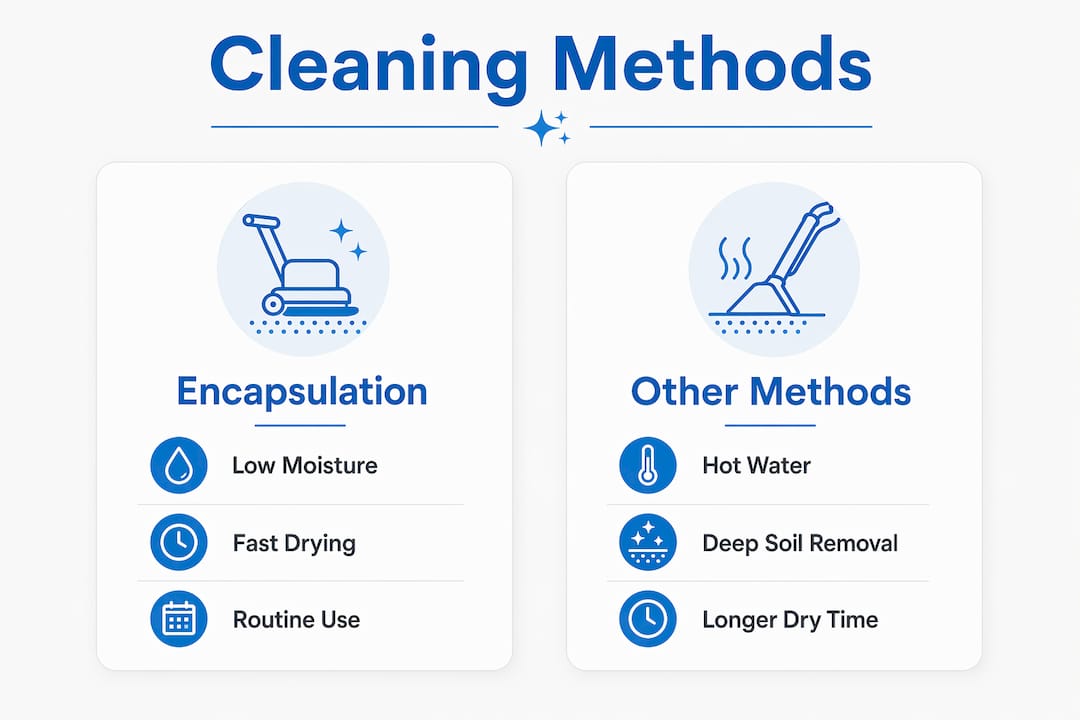
Hot water extraction, often called steam cleaning, forces hot water and detergent deep into the carpet pile and extracts it with powerful suction. It removes embedded grit, allergens, and oily soils that encapsulation cannot reach. The tradeoff is a 4 to 12 hour dry time and the risk of over-wetting if the technician is not experienced.
Dry compound cleaning uses an absorbent powder worked into the carpet with a brush machine. It is the gentlest method and works well on delicate natural fibers, but it only addresses surface soil and leaves no protective polymer film behind.
Bonnet cleaning uses a rotating pad soaked in cleaning solution to buff the carpet surface. It produces fast results and is popular in hotels, but it can push soil deeper into the pile rather than removing it, which creates problems over time.
Pro Tip: For commercial carpet maintenance, the most effective programs cycle encapsulation every four to eight weeks for appearance maintenance, then schedule hot water extraction two to four times per year for a full soil reset. This keeps carpets looking sharp without constant deep cleaning costs.
When and how should you use encapsulation cleaning effectively?
Encapsulation works best as a scheduled maintenance tool, not a one-time fix. Here is how to integrate it correctly for both home and business settings.
- Frequency for commercial spaces. High-traffic offices, retail stores, and hotels benefit from encapsulation every four to eight weeks. This keeps appearance consistent without the downtime of frequent hot water extraction.
- Frequency for residential use. Most homes do well with encapsulation two to four times per year as a maintenance clean, with one or two hot water extractions annually for deeper soil removal.
- Carpet type matters. Encapsulation is ideal for synthetic carpets like nylon, polyester, and olefin, which are common in commercial-grade installations. Avoid it on wool, sisal, or other natural fiber carpets without consulting a professional first.
- Environmental conditions. Humidity above 65% slows crystallization significantly. Excess moisture slows drying and soil recovery, so schedule encapsulation cleaning on dry days or run a dehumidifier beforehand in humid climates.
- Know when to call in hot water extraction. If your carpet has visible staining, pet odor, or has not had a restorative clean in over a year, start with hot water extraction. Encapsulation on a heavily soiled carpet will not produce satisfying results and may lock in odors.
- Build a combined maintenance plan. The most effective carpet maintenance programs combine frequent encapsulation sessions with scheduled deep extraction cleanings. Think of encapsulation as the regular oil change and hot water extraction as the full service.
Pro Tip: Always vacuum in multiple directions after encapsulation dries. A single-pass vacuum misses crystals trapped between fiber twists, especially in cut-pile and Saxony carpets.
For homeowners who want low-moisture options that fit into a busy schedule, this quick-dry carpet cleaning guide covers how encapsulation fits alongside other fast-drying approaches.
Key takeaways
Encapsulation carpet cleaning delivers fast, low-moisture maintenance results for synthetic carpets, but it requires proper vacuuming, correct dwell time, and periodic hot water extraction to remain effective long term.
| Point | Details |
|---|---|
| Method classification | Encapsulation is a maintenance method, not a restorative deep clean. |
| Dry time advantage | Carpets are ready for use in 30 to 60 minutes, far faster than hot water extraction. |
| Polymer chemistry | Acrylic copolymers crystallize around soil particles, which are then removed by vacuuming. |
| Critical limitation | Heavy embedded soil and oily stains require hot water extraction, not encapsulation. |
| Best practice | Combine regular encapsulation with annual deep extraction for optimal carpet health. |
Why I think most people misuse encapsulation cleaning
After more than two decades working with carpets across residential homes in Elgin and Bartlett and commercial accounts in Arlington Heights and Palatine, I have seen one pattern repeat itself constantly. People discover encapsulation, love the fast dry time, and then use it exclusively. They stop scheduling hot water extractions entirely. Within 18 months, the carpet looks dull, feels stiff, and has a faint odor that no amount of encapsulation will fix.
Encapsulation is genuinely excellent at what it does. The polymer chemistry is smart, the productivity rates are real, and the low moisture is a legitimate advantage for busy households and commercial facilities. But it is a maintenance tool, not a cure-all. The mistake is treating it like one.
The other thing I see constantly is poor vacuuming. Homeowners apply the product correctly, wait for it to dry, and then run a lightweight stick vacuum over the carpet once. The crystals are still there. The soil is still there. They conclude that encapsulation does not work, when the real problem is that the final vacuuming step was not thorough enough. A commercial-grade vacuum with strong suction, run slowly in multiple directions, is what actually completes the process.
My honest recommendation is to use encapsulation for regular upkeep and bring in a professional for hot water extraction at least once a year. That combination keeps carpets genuinely clean rather than just appearing clean.
— Jim
Keep your carpets cleaner, longer with Carpetandtileplus
Carpetandtileplus serves homeowners and businesses across the Northwest Suburbs of Chicago, including Elgin, Bartlett, Streamwood, and Arlington Heights, with IICRC-certified carpet cleaning using organic, eco-friendly solutions.

Whether you need routine commercial carpet cleaning for a high-traffic office or a residential carpet cleaning session for your home, our technicians deliver a one-hour dry time with no disruption to your day. We also offer odor removal services for situations where encapsulation alone is not enough. With over 20 years of experience and hundreds of five-star reviews, Carpetandtileplus is the trusted choice for carpet care in the Chicago suburbs. Contact us today to schedule your service.
FAQ
What is encapsulation carpet cleaning in simple terms?
Encapsulation carpet cleaning is a low-moisture method where a polymer-based detergent is applied to carpet fibers, surrounds soil particles, dries into brittle crystals, and is then removed by vacuuming. It leaves carpets dry and ready for use within 30 to 60 minutes.
Is encapsulation carpet cleaning better than steam cleaning?
Neither method is universally better. Encapsulation is faster and uses far less water, making it ideal for routine maintenance and commercial settings. Hot water extraction removes deeper embedded soil and allergens, making it the right choice for restorative cleaning or heavily soiled carpets.
How often should encapsulation carpet cleaning be done?
Commercial spaces benefit from encapsulation every four to eight weeks, while most homes do well with two to four sessions per year. Both settings should also schedule hot water extraction one to two times annually for a full soil reset.
What carpets are not suitable for encapsulation cleaning?
Wool, sisal, and other natural fiber carpets are generally not good candidates for encapsulation because of sensitivity to agitation and pH levels. Synthetic carpets like nylon, polyester, and olefin respond best to this method.
Can encapsulation carpet cleaning remove pet odors?
Encapsulation is not effective at removing pet odors caused by deep-set urine or biological contamination. Those situations require hot water extraction or a dedicated odor treatment, since encapsulation only addresses surface and mid-pile soil.