
A musty smell from air vents usually points to mold or a clogged condensate drain, while rotten-egg, sulfur, or strong burning-plastic odors mean stop and evacuate, then call your gas company or a licensed HVAC technician immediately. Most cases fall into the safe category: swap the filter, check the drain pan for standing water, and run the fan for 30 minutes. If the smell doesn’t clear, you’re looking at a maintenance issue, not an emergency.
TL;DR:
- Musty odors typically indicate mold growth on the evaporator coil or in the drain pan, caused by trapped moisture from a clogged drain or dirty filter.
- Burning plastic or electrical smells require immediate system shutdown and professional inspection to prevent fire hazards or electrical failure.
- A rotten egg or sulfur smell suggests a natural gas leak, necessitating evacuation and urgent contact with the gas utility.
- Persistent odors despite basic maintenance often signal hidden issues like refrigerant leaks, dead animals in ducts, or mold buildup needing professional remediation.
- Regular upkeep such as changing filters every one to three months and inspecting the condensate drain and duct insulation reduces odor recurrence and prevents costly repairs.
Table of Contents
- What Does the Smell From Your Air Vents Actually Mean?
- How Do You Diagnose the Cause Before Calling Anyone?
- What DIY Fixes Actually Work for Vent Odors?
- When Is a Vent Smell a Real Emergency?
- When Should You Call a Professional?
- How Do You Stop the Smell From Coming Back?
- How Carpet & Tile Plus Approaches Vent-Odor Problems
- Get Your Air Ducts Professionally Inspected and Cleaned
- Sources
What Does the Smell From Your Air Vents Actually Mean?
Your nose is doing real diagnostic work here, and different odors point to genuinely different problems. Getting the smell right narrows down the fix before you even open a vent cover.
Musty or dirty-sock smell. This is the most common complaint homeowners bring to HVAC technicians, and it almost always traces back to moisture sitting where it shouldn’t. Water collects on the evaporator coil during cooling season, drips into the condensate pan, and if the drain is even partially clogged, that water sits and grows mold or bacteria. Carrier’s own technical guidance identifies dirty coils, clogged drains, and dirty filters as the leading causes of this exact odor. HVAC techs sometimes call this “dirty sock syndrome,” and it tends to hit the hardest right when the AC kicks on after sitting idle.
Sour or vinegar-like odor. Slightly different from musty, this smell often means bacterial growth rather than mold specifically, usually in the same coil and drain-pan area. If basic maintenance doesn’t resolve it, professional coil cleaning or antimicrobial treatment is typically the long-term answer.
Burning smells. Context matters enormously here. A faint burning-dust smell during the first heating cycle of the season is normal. Dust settles on the heat exchanger over the off season and burns off within a few minutes of startup. But a burning-plastic or electrical smell that lingers or intensifies is a different story entirely. That usually means a failing motor, an overheating wire, or an electrical component about to fail, and it demands an immediate system shutoff.
Rotten egg or sulfur smell. Natural gas itself is odorless, so utilities add mercaptan, which smells like rotten eggs, specifically so leaks get noticed. If this smell is coming from near your furnace, treat it as a gas leak until proven otherwise. A sewage smell is a separate issue tied to dry P-traps in rarely used drains, not the gas line.
Sweet or chemical smell. This can indicate a refrigerant leak, especially if it’s paired with the AC losing cooling power. Skunk or rotting smell, meanwhile, is often a dead rodent that got into the ductwork and didn’t get out.
Here’s a quick reference for matching smell to cause:
- Musty or dirty-sock: mold, mildew, or bacteria on the evaporator coil or drain pan
- Sour or vinegar: bacterial buildup, similar location to musty odors
- Faint burning dust (startup only): normal, should clear in minutes
- Burning plastic or electrical: overheating motor or wiring, shut off immediately
- Rotten egg or sulfur: possible gas leak, evacuate and call the gas company
- Sewage: dry P-trap, usually a simple fix
- Sweet or chemical: possible refrigerant leak
- Skunk or putrid: dead animal in the ductwork
How Do You Diagnose the Cause Before Calling Anyone?
Work through this sequence before you spend money on a service call. It takes fifteen to twenty minutes and tells you almost everything you need to know.
- Note the timing. Does the smell show up only when the system runs, or is it there all the time? Smell tied to blower operation usually means something inside the air handler or ductwork. A constant smell regardless of system status points more toward a source in the house itself, like a damp crawlspace feeding air into your returns.
- Find the strongest vent. Walk room to room and note which vent smells worst. If it’s near a return duct that pulls air from a crawlspace, attic, or basement, that space itself may be the actual odor source, not the HVAC equipment.
- Pull the filter. Look at it under good light. Gray dust buildup is normal. Dark spots, a fuzzy texture, or a musty smell coming off the filter itself points toward moisture and mold.
- Check the condensate pan and drain line. This sits under the indoor evaporator coil, usually in the attic or a closet near the furnace. Standing water, a slimy film, or algae growth here is one of the most common odor sources in the entire house.
- Refill dormant P-traps. If you suspect sewage smell and have a floor drain, unused laundry sink, or guest bathroom you rarely touch, pour a cup of water down the drain. A dry trap lets sewer gas rise straight into the room.
- Look for entry points and burn marks. Check exterior duct penetrations, attic vents, and crawlspace openings for gaps large enough for a mouse or squirrel. Separately, look at your furnace’s electrical connections for any discoloration or a scorched smell near the blower motor.
Pro Tip: Take a photo of your filter and condensate pan before you touch anything. If you end up calling a technician, those photos help them skip straight to the likely cause instead of re-diagnosing from scratch.
This checklist won’t catch everything, a refrigerant leak inside the coil, for instance, isn’t something you can visually confirm. But it rules out the two most common causes (dirty filter, clogged drain) in under twenty minutes, which is often all it takes.
What DIY Fixes Actually Work for Vent Odors?
Once you’ve identified a likely cause, several fixes are genuinely safe and effective for a homeowner to handle without tools beyond a screwdriver and a shop vac.
- Replace the filter. Turn off the system at the thermostat first, both to stop airflow and to avoid pulling loose debris further into the ductwork while you work. Use a pleated filter rated MERV 8 or higher if your system supports it. Standard fiberglass filters trap far less particulate and won’t do much for odor control.
- Flush the condensate drain line. Locate the drain line near your indoor unit and use a wet/dry shop vac at the outdoor end to pull out clogs, or a small burst of compressed air on smaller lines. Avoid pouring bleach or other corrosive cleaners down metal drain lines. They can eat through connections over time. A cup of distilled vinegar is a gentler option for breaking down algae buildup.
- Clean accessible vent covers and registers. Unscrew the grilles, wash them in warm soapy water, and let them dry completely before reinstalling. Dust and pet hair trapped in the louvers can hold odor long after the real source is fixed.
- Run the fan on its own for 30 to 60 minutes. This circulates air through the system without cooling or heating, which helps dry out residual moisture on the coil. Pairing this with a dehumidifier in the mechanical room, especially in humid months, reduces the moisture that feeds mold in the first place.
- Know your limits. Cleaning the evaporator coil itself requires taking apart the air handler cabinet, and doing it wrong can bend the delicate aluminum fins or damage refrigerant lines. Full duct cleaning to remove built-up dust, mold, or debris deep in the system is also a job for professional equipment, not a shop vac and a broom handle.
If you’ve done all five steps and the smell hasn’t budged after a full day of normal use, that’s your signal the problem sits somewhere DIY tools can’t reach.
When Is a Vent Smell a Real Emergency?
Some odors don’t get a wait-and-see period. If you smell any of the following, treat it as urgent and act immediately, not after finishing what you’re doing.
- Rotten egg or sulfur near the furnace: leave the house, call your gas utility from outside using a cell phone or a neighbor’s phone, and don’t flip any light switches or operate anything electrical on your way out.
- Burning plastic or a worsening electrical smell: shut the HVAC system off at the breaker, not just the thermostat, and evacuate if you see smoke or the smell is getting stronger. Call an electrician or HVAC technician before turning anything back on.
- Sweet or chemical smell paired with weak cooling: ventilate the space, shut the system down, and call a licensed HVAC contractor. Refrigerant systems are sealed and pressurized; this isn’t a fix-it-yourself repair.
- Anyone in the house shows dizziness, headache, or nausea: get everyone outside into fresh air first, then seek medical attention. Don’t wait to see if symptoms pass.
Carbon monoxide deserves its own mention here because it’s genuinely different from every smell above: it has no odor at all. A failing furnace can produce it as a byproduct of incomplete combustion, and the CDC’s carbon monoxide guidance is blunt about the response if you suspect exposure: get outside immediately and seek medical care. The CPSC recommends installing CO alarms on every level of the home, particularly near sleeping areas, precisely because you can’t smell your way out of this one.
When Should You Call a Professional?
DIY has a ceiling, and a handful of signs tell you’ve hit it. Visible mold growth on any duct surface, a smell that persists after you’ve replaced the filter and flushed the drain, a dead animal you can hear or smell but can’t reach, any electrical burning smell, a suspected refrigerant leak, or sewer gas that returns after you’ve refilled the P-traps all mean it’s time to book a service call.
Reputable HVAC and duct-cleaning technicians typically handle these situations with a specific set of tools and procedures:
- Camera inspection of the full duct run to locate mold, debris, or animal nests without tearing open walls.
- Deep cleaning of the evaporator coil and drain pan, which removes buildup that a homeowner physically can’t reach.
- Negative-pressure containment and HEPA filtration when mold is present, which keeps spores from spreading into the rest of the house during the work. EPA mold remediation guidance specifically recommends shutting the HVAC system down during this kind of work to avoid circulating spores through the ductwork.
- Humane animal removal and sealing of the entry point so it doesn’t happen again.
- Electrical diagnostics on the blower motor, capacitor, and wiring if burning smells were reported.
Before hiring anyone, ask a few direct questions: Are your technicians IICRC-certified or NATE-certified? What containment method do you use for mold-affected ductwork? Do you use HEPA filtration during the job? Will I get a written estimate before work starts? A technician who hesitates on any of these is worth a second call elsewhere.
Pro Tip: Ask what they’ll do after the cleaning, not just during it. A technician worth hiring should recommend a follow-up plan, like a filter schedule or a drain-line check, not just clean and leave. It’s also worth remembering the EPA’s stance on duct cleaning: it isn’t a cure-all. If moisture is entering the system from a roof leak or poor attic ventilation, cleaning the ducts without fixing that source just buys you a few months before the smell comes back.
How Do You Stop the Smell From Coming Back?
Prevention here isn’t complicated, but it does require sticking to a schedule instead of waiting for a smell to remind you.
- Filters: replace every one to three months, more often if you have pets or run the system heavily. A pleated MERV 8 or higher filter, if your system’s static pressure allows it, traps more of the particulate that feeds odor over time.
- Condensate drain and pan: check every season, especially before heavy cooling months. Algae tablets dropped into the pan can slow biofilm buildup between cleanings.
- Duct insulation: in attics, crawlspaces, or garages, uninsulated ducts sitting in humid air can sweat on the outside, which drips onto insulation and framing and eventually grows mold. Sealing and insulating those runs stops the condensation before it starts.
- Indoor humidity: keep it between 30% and 50%. Run bathroom and kitchen exhaust fans after showers or cooking, and consider a standalone dehumidifier in a damp basement.
- Annual tune-up: have a technician inspect the coil, check refrigerant charge, and clean components you can’t reach yourself. This is also when a professional evaluates whether full duct cleaning makes sense for your home.
| Maintenance task | How often | What it prevents |
|---|---|---|
| Filter replacement | Every 1 to 3 months | Musty odor, reduced airflow, coil strain |
| Condensate drain check | Seasonally | Standing water, algae, dirty-sock smell |
| Duct insulation check | Annually | Condensation, mold growth in unconditioned spaces |
| Humidity monitoring | Ongoing | Mold conditions, sour or musty smells |
| Professional tune-up | Annually | Coil buildup, early detection of leaks or wiring issues |
Skip any one of these long enough and you’ll likely be back to square one: sniffing at a vent trying to figure out if it’s a Tuesday-afternoon problem or a call-somebody-now problem.
How Carpet & Tile Plus Approaches Vent-Odor Problems
We’ve spent over 20 years working through exactly this kind of diagnostic puzzle, and the biggest mistake we see is homeowners masking a smell instead of fixing what’s causing it. Our IICRC-certified technicians start with an inspection, not a spray bottle. We want to know if we’re looking at a drain pan issue, coil growth, or something upstream feeding moisture into the system before we touch anything.
When we do clean, we use organic products and, where mold is present, proper containment so spores don’t just move from the ducts into your living room. We verify the fix worked before we call the job done, not just that it smells better that afternoon. Root-cause work takes a little longer than a quick spray, but it’s the difference between a smell that’s gone for good and one that’s back in six weeks.
Run through the diagnostic checklist above before you call. It helps us get to the actual source faster.
— Jim
Get Your Air Ducts Professionally Inspected and Cleaned
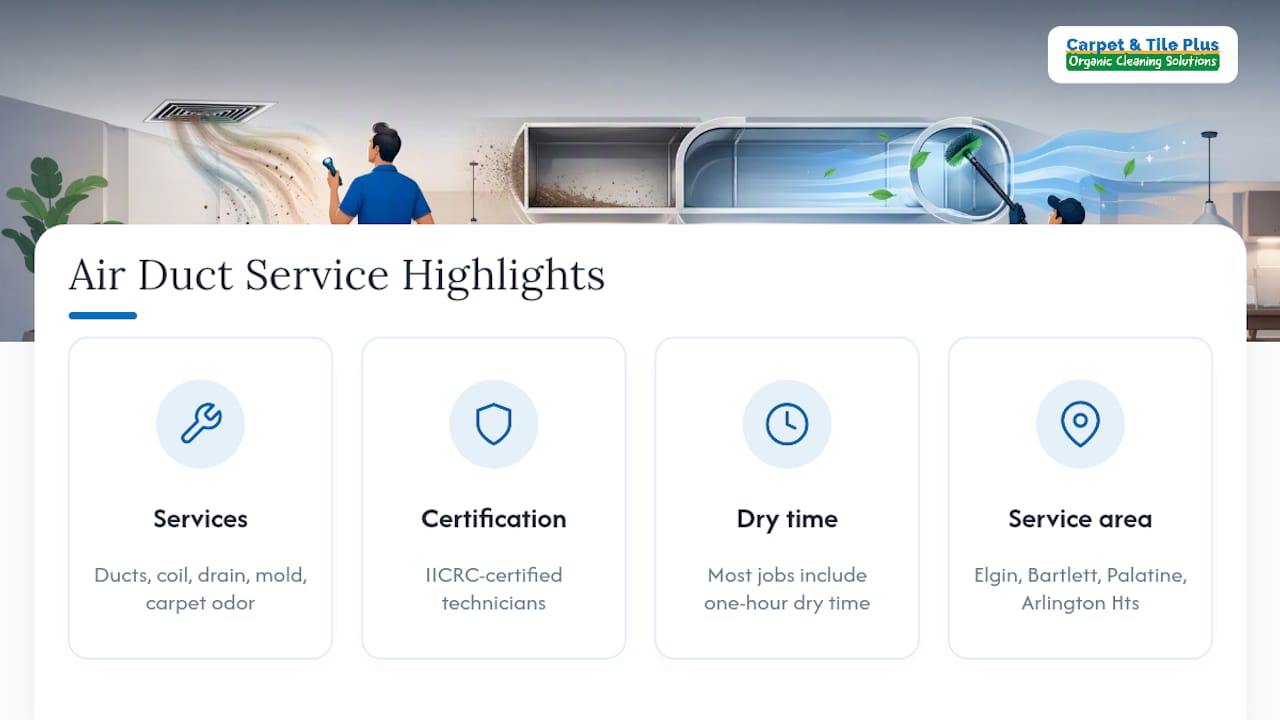
If you’ve worked through the filter swap, the drain flush, and the fan cycle and the smell is still there, it’s time for equipment and expertise a shop vac can’t match. Carpet & Tile Plus handles air duct cleaning, coil and drain servicing, mold containment, and carpet odor removal for homes across the Northwest Suburbs of Chicago, from Elgin and Bartlett to Palatine and Arlington Heights.

Every technician on our team is IICRC-certified, and we clean with organic products that won’t leave behind a chemical smell to replace the one you started with. Most jobs also come with a one-hour dry time, so you’re not living with fans running for two days afterward. If the odor traces back to something circulating through your carpets rather than the ductwork itself, our carpet odor removal service tackles that separately.
Ready to get it checked out properly? Visit our air duct cleaning services page to see what’s included and request a quote for your home.
Sources
For the safety and remediation claims in this guide, consult the primary sources directly: the EPA’s indoor air quality and mold cleanup guidance, the CDC’s carbon monoxide factsheets, and the CPSC’s guidance on CO alarms. Each covers exposure risks and household safety measures in more depth than any single article can.
- Mold cleanup in your home — EPA
- Carbon monoxide (CO) factsheets — CDC
- CO alarms — CPSC
- Why does my AC smell? — Carrier