
Most of the pet hair you see in your vents is a nuisance, not an emergency. It collects on return grilles, floor registers and the furnace filter, where you can remove it yourself in minutes. Professional duct cleaning only makes sense when the hair has built up into a heavy, visible clog, or when there is mold or a pest problem. Below is how to tell which situation you are in, what to do about each, and how to keep fur from coming back.
TL;DR
- Most pet hair stops at the grilles and the filter. Vacuum the vent covers and change the filter on schedule, and you handle the majority of the problem.
- The EPA says duct cleaning has never been shown to prevent health problems, and suggests it mainly when there is visible mold, an infestation, or ducts clogged with large amounts of debris.
- Pet hair is not the allergen. Dander, saliva and urine proteins are, and they settle mostly in carpet, furniture and bedding.
- If you do hire a duct cleaner, ask for source removal with negative pressure, not just a blow-out.
- Carpet is usually the bigger reservoir. Cleaning it often does more for a pet household than cleaning ducts.
Table of Contents
- Where the hair goes
- What pet hair does to a heating and cooling system
- Is pet hair in the ducts a health problem?
- When duct cleaning is worth it
- What a proper duct cleaning involves
- How to keep pet hair out of your vents
- The bigger reservoir: your carpet
- A quick way to decide
- Our perspective
- Book help for a pet household
- FAQ
- Sources
Where the hair goes
Hair is light. Every time the furnace or AC kicks on, air moves toward the return vents, and loose fur and dander travel with it. In a typical home that sends hair to three places.
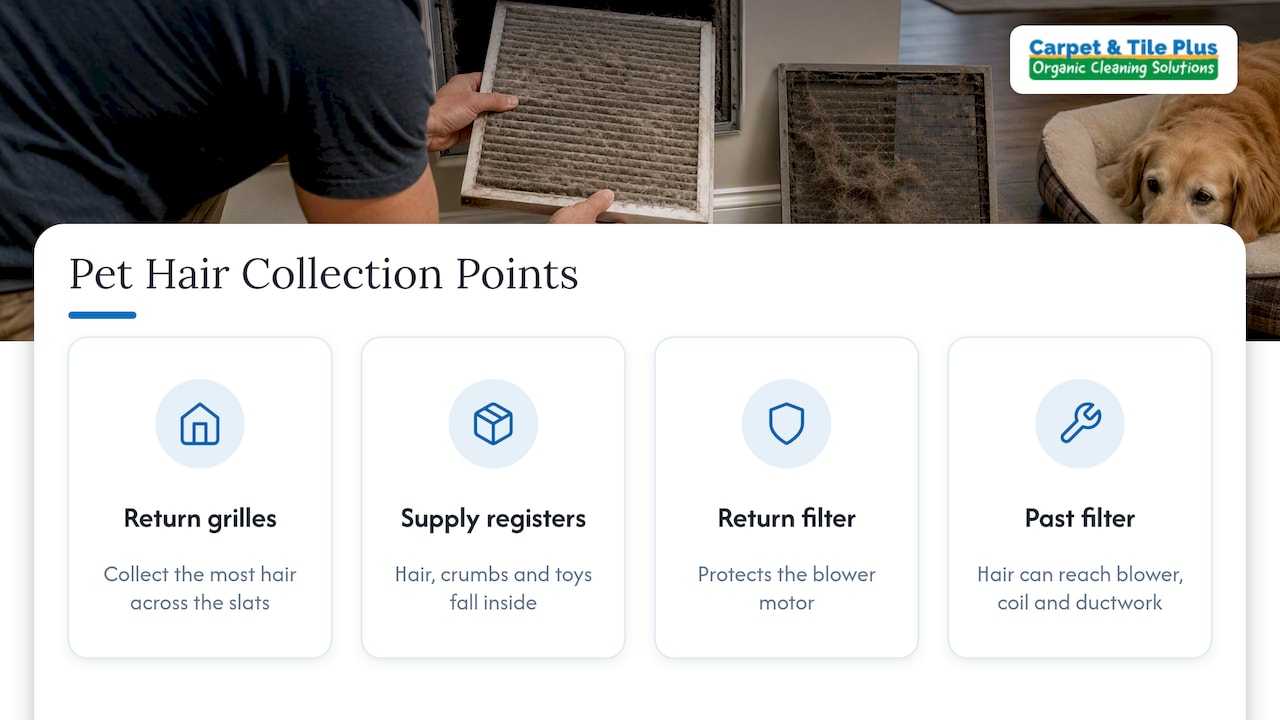
Return grilles. These pull in the most air, so they collect the most hair. A gray, felted layer across the slats is common in homes with a shedding dog or cat.
Floor and wall registers. Many Chicago-area homes, especially older ones in Elgin, Palatine and Arlington Heights, have supply registers in the floor. Hair, crumbs and pet toys fall right in. When the system starts, hair can blow back out, which is the complaint behind many homeowner threads on the topic.
The filter. This is the real checkpoint. The US Department of Energy notes that filters on the return side protect the blower motor and help indoor air quality, and that a clogged filter cuts efficiency sharply.
Whatever gets past a clogged or poorly fitted filter can reach the blower, coil and ductwork. That is the part that sometimes calls for a professional.
What pet hair does to a heating and cooling system
A thin coating of hair on a grille does little. A thick mat is different. It restricts airflow, so the system runs longer to reach the temperature you set. The Department of Energy says restricted filters raise energy use and add wear to the motor. You may notice:
- weak airflow from some rooms
- a musty or “dog” smell when the system starts
- the furnace or AC cycling longer than it used to
- visible fur drifting out of registers when the blower begins
None of these proves the ducts themselves are full of hair. A clogged filter or a dirty return grille causes most of them, so start there.
Is pet hair in the ducts a health problem?
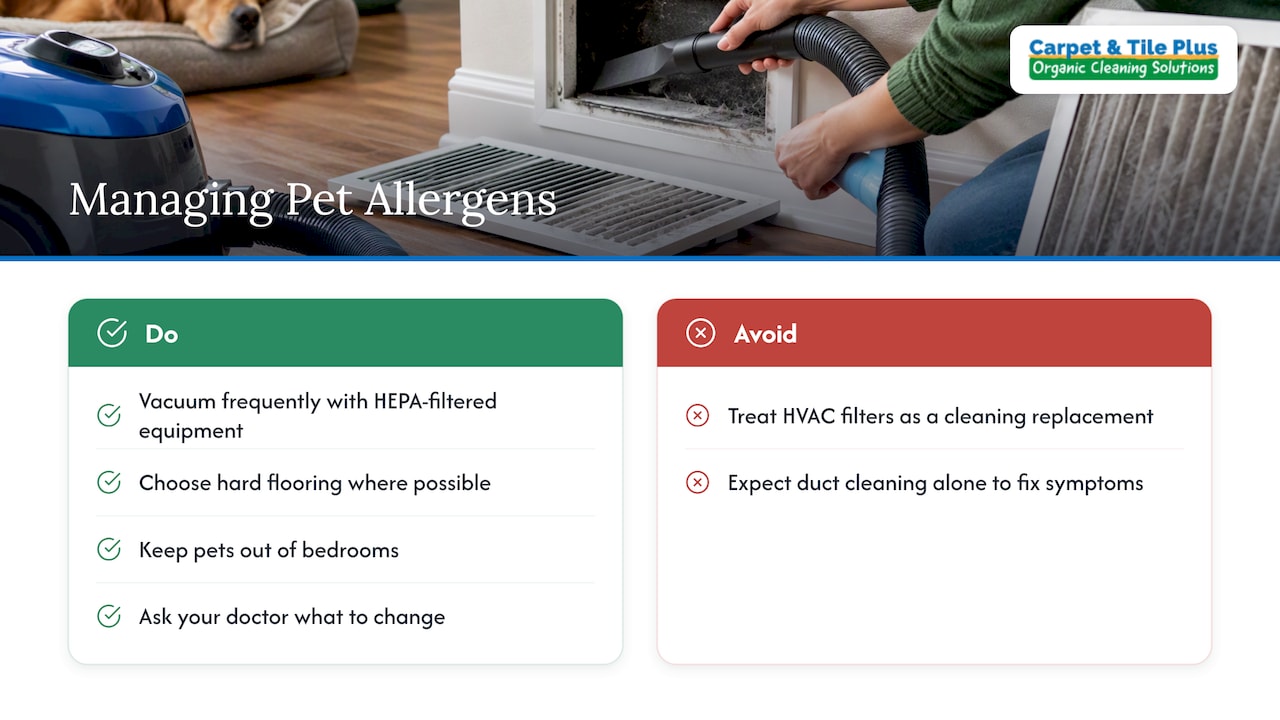
Here is the part many duct-cleaning ads skip. According to the American Academy of Allergy, Asthma & Immunology, the allergen is not the hair. It is proteins in the pet’s dander, saliva and urine. Those proteins are microscopic and spread through the whole home, collecting on soft surfaces.
The AAAAI’s guidance on indoor allergens points to source control inside the living space: frequent vacuuming with HEPA-filtered equipment, hard flooring in place of carpet where possible, and keeping pets out of bedrooms. It treats HVAC filters as a supplement, not a replacement, for cleaning the house.
The EPA is equally measured. Its page on whether to have your ducts cleaned says duct cleaning has never been shown to prevent health problems, and that studies have not conclusively shown that dirty ducts raise dust levels in a home. Much of the dirt in ducts clings to the surfaces instead of entering your living space.
If someone in your home has asthma or a pet allergy, talk with your allergist or doctor about what to change. Do not rely on a duct cleaning alone to fix symptoms.
When duct cleaning is worth it
The EPA suggests considering it in a few specific cases:
- Substantial visible mold growth inside hard-surface ducts or on other parts of the heating and cooling system.
- Rodents or insects have infested the ducts.
- The ducts are clogged with large amounts of debris that blocks airflow, or debris is released into the home from the registers.
For a pet household, the third case is the one that applies. If you remove a register cover and see a thick, packed layer of hair and dust you cannot reach with a vacuum hose, or hair keeps blowing out of the vents even after the filter is fresh, an inspection is reasonable. We lay out the same three triggers in our guide on when to choose air duct cleaners, and our air duct cleaning checklist walks through what to look at before you book anyone.
If a technician tells you pet dander in the ducts is the cause of your allergies and the only fix is a duct cleaning, get a second opinion. That claim is not supported by the sources above.
What a proper duct cleaning involves
If you do need one, method matters more than price. The National Air Duct Cleaners Association describes source removal: mechanical agitation (brushes, air whips or nozzles) to loosen debris, while the system is kept under negative pressure so a vacuum collects what comes loose. A provider who only blows air through the ducts can push contamination around the house instead of removing it.
Two more points from NADCA:
- The whole system counts. The NADCA guidance on choosing a provider says the entire HVAC system should be under continuous negative pressure during cleaning, and cleaning only the ducts while skipping components such as the blower, coils and drain pan risks recontamination.
- Ask what is covered. A quote should say which components are cleaned, how the system is contained and how debris is removed from your home.
We explain how this works in plain terms in our article on negative air pressure duct cleaning. If you are weighing add-on treatments, see whether air ducts should be sanitized first.
How to keep pet hair out of your vents
Prevention is cheap and works better than any cleaning after the fact.
Change the filter on a pet schedule
The Department of Energy suggests checking or replacing filters about every 90 days for ducted systems, and more often when needed. With a shedding dog or two cats, check monthly. Pull it out and look: if you cannot see light through it, replace it. Follow your equipment’s owner’s manual for filter size and type. Higher-MERV filters (MERV 6 and above) catch more dander and pollen, but the DOE cautions that they need careful monitoring because a clogged filter hurts efficiency.
Vacuum around and on the vent covers
Vacuum the floor around each register, then run a brush attachment over the faces of the grilles. Hair that never reaches the grille never reaches the system. Do this every time you vacuum the room.
Keep return grilles clear
Wipe the slats with a damp cloth or a vacuum brush every few weeks. Pull return grilles off (usually a few screws or clips) twice a year and vacuum the first foot of duct behind them. Turn the system off first.
Block the gaps
Sealing cracks under doors and around floor registers keeps hair and debris from being pulled in. Inexpensive magnetic or mesh register covers can catch hair at floor registers, but check that they do not choke airflow. Keep your outdoor condenser unobstructed too, since airflow matters on both sides of the system; this piece on AC unit screens and airflow covers that side of the question.
Groom the pet
Brushing outdoors or in a room without a return vent cuts the loose fur in the air. Regular baths and a good brushing routine matter more than any accessory.
The bigger reservoir: your carpet
For most pet owners, carpet holds far more hair, dander and odor than the ducts do. Every step across it lifts particles that the HVAC system then circulates. The AAAAI lists replacing carpet with hard flooring as one control, but most households keep their carpet, so cleaning it well is the practical route.
That is why we usually steer pet owners to carpet first. Our crews use low-moisture methods and organic cleaning products, aiming for about a one-hour dry time, which matters when pets and kids are in the house. See our pages on pet-friendly carpet cleaning and allergy-friendly carpet cleaning, and if accidents are the issue, our pet stain and odor removal.
For hard floors, pet hair and dander also settle into textured tile and grout lines, and into luxury vinyl plank seams. We clean both, covered on our tile and grout and vinyl plank pages.
A quick way to decide
| What you see | Likely cause | What to do |
|---|---|---|
| Fur on grille slats | Normal shedding | Vacuum the grille weekly |
| Weak airflow, long run times | Clogged filter | Replace the filter, then recheck |
| Hair blowing out of floor registers | Debris in the register boot or short duct run | Remove the cover, vacuum with a hose attachment |
| Thick packed hair deep in ducts, filter already fresh | Heavy buildup | Get an inspection, consider source-removal cleaning |
| Musty odor, visible mold | Moisture problem | Call an HVAC pro and a duct cleaner; fix the moisture source |
| Pet smell mostly near the floor | Carpet and pad | Professional carpet cleaning with pet odor treatment |
Our perspective
We clean carpet, tile and air ducts in homes across Elgin, Bartlett, Streamwood, Palatine, Arlington Heights and the surrounding suburbs, and the pet-hair call comes up all the time. Our honest answer is that ducts are rarely where the problem starts. The EPA and the allergy specialists agree on that, and we would rather tell you so than sell you a service you do not need.
What we see in pet homes is a predictable pattern: a filter that has gone months without a change, grilles furred over, and carpet that has been holding dander for years. Fixing those three things usually changes how the house feels. When ducts do need attention, we want it done the right way, with negative pressure and source removal, not a quick blow-out that leaves the dust in your living room.
Our technicians are IICRC-certified, we use organic products, and we stand behind our work with a 100% satisfaction guarantee. If we look at your system and conclude the cleaning is not warranted, we will say so.
— Joe
Book help for a pet household
If the fur has built up past what a vacuum can handle, start with an air duct cleaning inspection. If the smell, dander and hair are mostly at floor level, our residential carpet cleaning is the better first step. Published pricing for residential carpet cleaning runs $120 to $300 per job, and commercial carpet cleaning runs $200 to $500, as shown on our carpet cleaning cost page. We do not publish a price for duct work, so we quote it after we learn about your home.
FAQ
Can dog hair travel through vents?
Yes. Hair is light enough to be pulled into return vents and carried by the airflow. Most of it is caught by the grille and the filter, but a worn or badly fitted filter lets more through. Regular filter changes and vacuuming around vents limit how far it goes.
Does air duct cleaning help with pet hair?
It can when ducts are packed with debris, but it is not a routine fix. The EPA suggests duct cleaning mainly for visible mold, infestation or heavy clogging, and says it has not been shown to prevent health problems. For pet allergies, cleaning carpet, upholstery and bedding usually matters more.
How do I keep pet hair out of air vents?
Vacuum the floor and the vent covers every time you clean, replace the filter at least every 90 days (monthly if your pets shed heavily), and brush your pets regularly. Sealing gaps around floor registers also keeps hair from falling in.
How often should I replace the furnace filter with pets?
The Department of Energy gives about 90 days as a general interval for ducted systems and says to change them sooner when needed. In a house with shedding pets, check it monthly and replace it when it looks gray and matted. Your owner’s manual has the right filter size and type.
Sources
- Should You Have the Air Ducts in Your Home Cleaned? (US EPA)
- Pet Allergy (AAAAI)
- Managing Indoor Allergen Culprits (AAAAI)
- HVAC Proper Installation of Filters (US Department of Energy)
- Proper Cleaning Methods (NADCA)
- Why Choose a NADCA Member (NADCA)