
Put in a new filter. If your ducts were just cleaned, the old filter has been sitting in the airstream while dust was pulled out of the system, and it is the cheapest part of the whole job to replace. A fresh filter protects the clean ducts, keeps the blower from straining, and gives you a clear starting point for the next inspection. Below: what to do on cleaning day, how to swap the filter correctly, which rating to buy, and how often to check it from then on.
What are the essential steps for managing your HVAC filter after duct cleaning?
- Replace your disposable filter right after duct cleaning, and never run the furnace or A/C without a filter in the slot.
- If your system uses a reusable filter, wash it and let it dry fully instead of buying a new one.
- Match the arrow on the filter frame to the airflow direction, toward the furnace or blower.
- Check the filter monthly. Change or clean it when it looks dirty, not just when the calendar says so.
- Buy the highest MERV rating your system can handle without choking airflow. For most homes, that means a mid-range pleated filter, not the densest one on the shelf.
What topics are covered in this guide to HVAC filter maintenance after duct cleaning?
- Why the filter matters right after a cleaning
- Replace it or clean it: the two kinds of filters
- How to swap the filter, step by step
- Choosing the right filter: MERV without the guesswork
- How often to check it after the cleaning
- Does a clean filter mean you can skip future duct cleaning?
- What a good duct cleaning visit should include for your filter
- Our perspective
- Book duct cleaning with Carpet and Tile Plus
- FAQ
- Sources
Why the filter matters right after a cleaning
Duct cleaning loosens dust, debris and fibers from supply and return runs and pulls them out through a vacuum. Some of that material inevitably ends up on or in the filter at the air handler. Federal building research guidance for removing construction debris from ducts is blunt about it: replace all existing air-handler filters before occupancy, and run the furnace or air handler only with a filter installed. That guidance was written for post-construction cleanouts, which are dirtier than a typical home service, but the logic carries over: the filter is the last line of defense between the duct system and your living space.
There is also a plain efficiency reason. ENERGY STAR explains that a dirty filter makes your heating and cooling system work harder to distribute air, which can raise energy costs, damage equipment and lead to early failure. Putting a clean filter behind freshly cleaned ducts means the system starts its next cycle with the least resistance it will see all year.
If you want the bigger picture on why ducts collect dust at all, our homeowner’s guide to why air ducts need regular cleaning covers it.
Replace it or clean it: the two kinds of filters
The answer depends on what is in your furnace or air handler.
| Filter type | What to do after duct cleaning | Notes |
|---|---|---|
| Disposable fiberglass or pleated | Replace with a new one | Cannot be washed; cleaning it damages the media |
| Reusable or washable | Clean it thoroughly, dry it, reinstall | Follow the manufacturer’s instructions |
| Electronic or specialty media filter | Follow the maker’s instructions | Check the manual or ask your HVAC technician |
ENERGY STAR’s guidance is simple: clean the filter if your system has a reusable one, and change it if your system takes a replacement filter. Do not try to vacuum a disposable pleated filter back to life. The fibers lose their ability to trap fine particles, and tiny tears let air bypass the media.
If you are not sure which type you have, look at the frame. Disposable filters have a cardboard border and a printed size. Washable ones usually have a rigid plastic or metal frame and a label saying so.
How to swap the filter, step by step
This takes about five minutes. ENERGY STAR lays out the sequence, and it matches what any technician would show you:
- Turn off the system. Switch off the furnace, the A/C and the fan so the blower is not pulling air while the slot is open.
- Find and remove the old filter. It sits in a slot at the furnace or air handler, or behind a return-air grille. Note the arrow printed on the frame before you pull it out.
- Check the size. Match the dimensions printed on the old filter. Nominal size (for example 16x25x1) is what you buy; the real dimensions are slightly smaller.
- Insert the new filter with the arrow pointing toward the furnace or blower. The arrow shows airflow direction. Backward installation reduces performance.
- Close the access cover securely so no air sneaks around the filter.
- Restart the system and listen for unusual whistling, which can signal a poor fit.
One more tip from the same source: ask your HVAC technician to demonstrate the right way to replace or clean filters during a maintenance visit. If our crew is on site for your duct cleaning, that is a good moment to ask.
Disposing of the old filter without spreading dust
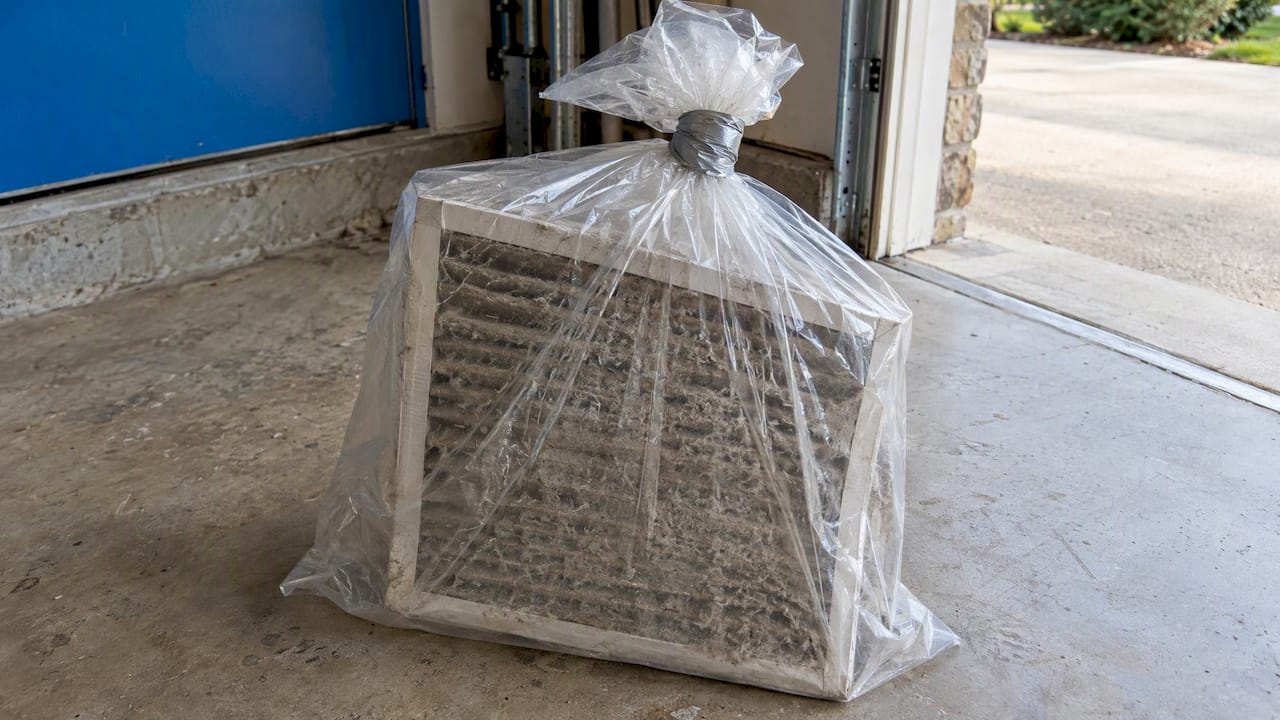
Carrying a dust-loaded filter through the house shakes loose exactly what you just paid to remove. The federal duct guidance recommends placing soiled filters in plastic bags and sealing them with duct tape before carrying them outdoors, then disposing of them under applicable federal, state and local rules. For a normal household filter, that means a tightly sealed bag in your regular trash unless your village or county says otherwise. Do not knock it against the side of the bin.
Choosing the right filter: MERV without the guesswork
MERV is the rating on the filter box. According to the EPA, MERV reports a filter’s ability to capture particles between 0.3 and 10 microns, using a test method developed by ASHRAE, and higher numbers mean better trapping of specific particle sizes.
It is tempting to jump to the highest number. The EPA’s filtration bulletin explains the catch: higher MERV filters trap more pollutants but can restrict airflow when they get dirty or clogged. It advises using the highest MERV filter that the fan and filter slot can accommodate without exceeding the blower motor’s static pressure limit. In practice:
- Thin 1-inch slots in older furnaces are often designed for low-to-mid ratings. Forcing a dense filter into one can starve the system of air.
- Deeper media cabinets (4 to 5 inches) hold more surface area, so they can carry a higher rating with less restriction.
- Check your equipment manual or ask your HVAC contractor what rating your blower tolerates. University of Georgia Extension makes the same point: use the highest-efficiency filter recommended by the HVAC manufacturer and change it regularly.
If dust is your main complaint, our guide to cutting duct dust with a MERV 8 to 11 filter, fan settings and leak sealing goes deeper on the practical settings.
A note on filter placement
Filters belong on the return side, where air enters the system. The EPA’s guidance calls for a filter slot on the return side of the air handler with a proper seal so air cannot bypass the filter, and notes that filters protect system components as well as removing particles from indoor air. Some homes also have filter grilles at individual return openings. If yours do, replace those on the same schedule as the main filter.
How often to check it after the cleaning
The first rule is to look, not guess. ENERGY STAR recommends checking residential filters monthly and cleaning or changing them when dirty. The EPA agrees that filters should be replaced or cleaned frequently for optimum operation.
Then the type of filter sets the rhythm. One maintenance-schedule reference puts 1-inch fiberglass filters (MERV 1 to 4) at roughly every 30 days, while 4-inch pleated filters (MERV 11 to 13) can last 6 to 12 months under normal residential use. Treat those as ballparks rather than promises, because your home is not average.
What shortens a filter’s life
- Pets that shed
- Recent remodeling, sanding or drywall work
- Running the fan continuously
- Smokers or heavy cooking in the home
- Open-window seasons with high pollen or dust, which is common in the Chicago suburbs in spring and fall
- Wall-to-wall carpet that sheds fibers and holds dust (regular carpet cleaning helps here)
A practical routine for the first few months after a duct cleaning: check the filter at the one-month mark, hold it up to a light, and note how much dust it has collected. If you can barely see through it, change it. That gives you a real interval for your house instead of a number from a box.
For businesses and larger systems
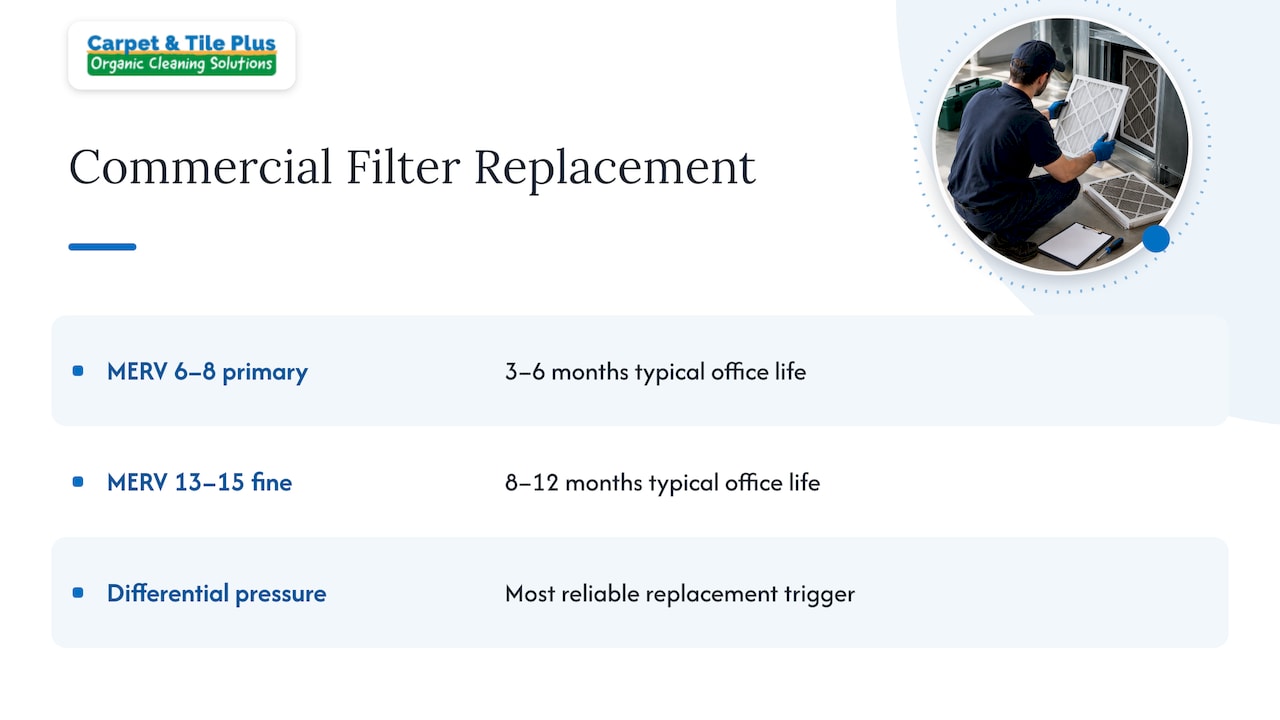
Commercial buildings run on different logic. One filter manufacturer’s guide says differential pressure, not time, is the most reliable replacement trigger, and the same guide lists typical office service lives of 3 to 6 months for MERV 6 to 8 primary filters and 8 to 12 months for MERV 13 to 15 fine filters. If you manage a property with rooftop units or an air-handling plant, your facility contractor should set the schedule from pressure readings.
Does a clean filter mean you can skip future duct cleaning?
Not exactly, and it is worth being straight about it. A good filter slows down how fast ducts get dirty. The University of Illinois EnergySense center puts it this way: prevention is key, so change filters regularly and keep air-handling units clean and working properly. UGA Extension adds a more cautious perspective: the EPA does not recommend routine duct cleaning, and the way to keep ducts clean is a quality filter changed regularly.
Both views point the same way. Duct cleaning is something you do when there is a reason: visible debris, a renovation, pests, mold concerns, or a long stretch with a neglected filter. The filter is what you do every month. If you are weighing whether it is time, our list of five signs it is time to clean your air ducts and the homeowner checklist for air duct cleaning help you decide, and our article on whether duct cleaning improves home air quality is candid about what to expect.
What a good duct cleaning visit should include for your filter
When you hire anyone to clean ducts, the filter should be part of the conversation, not an afterthought. Ask:
- Will the technician confirm what filter type and size you have?
- Will the old filter be bagged and removed, rather than dropped in the basement?
- Will the system be left with a filter in place, never running bare?
- Can they show you how to change it?
The construction-cleaning guidance also notes that equipment creating negative pressure in the ducts must be exhausted outdoors if it lacks HEPA filtration. That is a useful question for any contractor: what happens to the dust pulled out of your system? A contractor who answers clearly is usually one who works carefully. For a full walkthrough of what happens on the day, see our HVAC duct cleaning process guide, and if a quote sounds too good, read about air duct cleaning scams before you sign.
What is Carpet and Tile Plus's advice on HVAC filter maintenance after duct cleaning?
We clean ducts, carpets and tile across the Northwest Suburbs, and the filter is the part of the system customers most often ignore. We have walked into homes where the filter was so packed it looked like felt, and the owner assumed the ducts were the problem. Sometimes they were. Often the filter had simply been choking the system for a year.
Our advice is practical. Swap the filter on cleaning day, write the date on the frame in marker, and check it monthly for the first three months. Do not buy the densest filter on the shelf because the box promises the cleanest air. A filter your blower cannot breathe through does more harm than a modest one that is changed on time. And if you rent or manage a building, make sure whoever owns the equipment knows the filter schedule, because the best duct cleaning in the world fades fast behind a clogged filter.
We use low-moisture methods and organic products across our services, and we take the same careful, no-mess approach to your home’s air system: contain the dust, bag what comes out, leave the system ready to run.
— Joe
Book duct cleaning with Carpet and Tile Plus
If your ducts are due, or you are not sure, our IICRC-certified team handles air duct cleaning for homes and businesses in Arlington Heights, Bartlett, Barrington, Elgin, Elk Grove Village, Hoffman Estates, Lake Zurich, Mount Prospect, Palatine, Rolling Meadows, Streamwood and nearby suburbs. We are local and family-owned, with over 20 years of experience and a 100% satisfaction guarantee. Tell us what filter your system uses and we will point you to the right replacement.

If your carpets and tile need attention at the same time, ask us about carpet cleaning and tile and grout cleaning during the same visit window. Fresh ducts, a new filter and clean floors work together: less settled dust to stir up, less to land on your carpet.
Frequently Asked Questions about HVAC Filters and Duct Cleaning
Should I change my furnace filter right after duct cleaning?
Yes, if it is a disposable filter. The old one has been in the airstream during the cleaning and is likely loaded with dust. Federal duct-cleaning guidance calls for replacing existing air-handler filters before the space is occupied. If your filter is reusable, clean and fully dry it, then reinstall it.
Can I reuse an air filter after cleaning it?
Only if it is made to be reused. ENERGY STAR says to clean the filter if your system has a reusable one and change it if the system takes a replacement. Disposable paper-framed pleated filters should not be washed or vacuumed back into service.
Should return air ducts have filters?
The system needs a filter on the return side. The EPA’s guidance says the filter slot belongs on the return side of the air handler with a seal that stops air from bypassing it. Some homes also have filters behind return grilles, and those need changing on the same schedule.
How often should I check my HVAC filter?
Monthly. ENERGY STAR recommends monthly checks and replacing or cleaning when the filter looks dirty. Thin 1-inch filters often need changing sooner than thick 4-inch pleated ones, and pets or remodeling dust shorten the interval.
How long does duct cleaning last?
There is no fixed number, because it depends on your filter habits, pets, construction nearby and how tight your ductwork is. What helps most is keeping a properly sized filter in place and changing it on time, which the University of Illinois EnergySense center calls the key to prevention. If you see visible dust returning quickly, check for duct leaks as well.
What are the authoritative sources for HVAC filter and duct cleaning information?
- Removing Construction Debris from Ducts, Building America Solution Center
- How to Keep Your HVAC System Working Efficiently, ENERGY STAR
- Indoor airPLUS Technical Bulletin: Filtration, U.S. EPA
- What is a MERV rating? U.S. EPA
- Questions about filtration and air cleaning, University of Illinois EnergySense
- HVAC filters, duct cleaning, and indoor air quality, UGA Extension
- HVAC System Maintenance Schedules, HVAC Service Authority
- How Often Should You Replace Air Filters in Commercial HVAC, KWS